
Blog
Where to Find the World’s Finest Natural Tourmaline Crystals: Locality Guide

Where to Find the World’s Finest Natural Tourmaline Crystals: Locality Guide & Direct Sourcing
Tourmaline is celebrated by geologists as the most chemically diverse and visually captivating mineral group in the world. For serious collectors, museum curators, and investors, finding the finest natural tourmaline specimens requires understanding the exact granitic pegmatites that produce them.
Whether you are searching for a raw Paprok tourmaline on cleavelandite matrix or evaluating international pegmatite fields, knowing where to find tourmaline in its authentic, unheated state is critical. This comprehensive guide details the world’s premier tourmaline mining locations, examines what gives a raw tourmaline crystal its investment value, and demonstrates how to acquire untreated specimens directly from the source.
1. The World’s Top Tourmaline Mining Locations
While tourmaline is found across several continents, elite, gem-grade crystal specimens preserved naturally on original host matrix originate from a select few geological provinces.
1. Paprok, Nuristan (Afghanistan) — The Benchmark for Polychrome Crystals
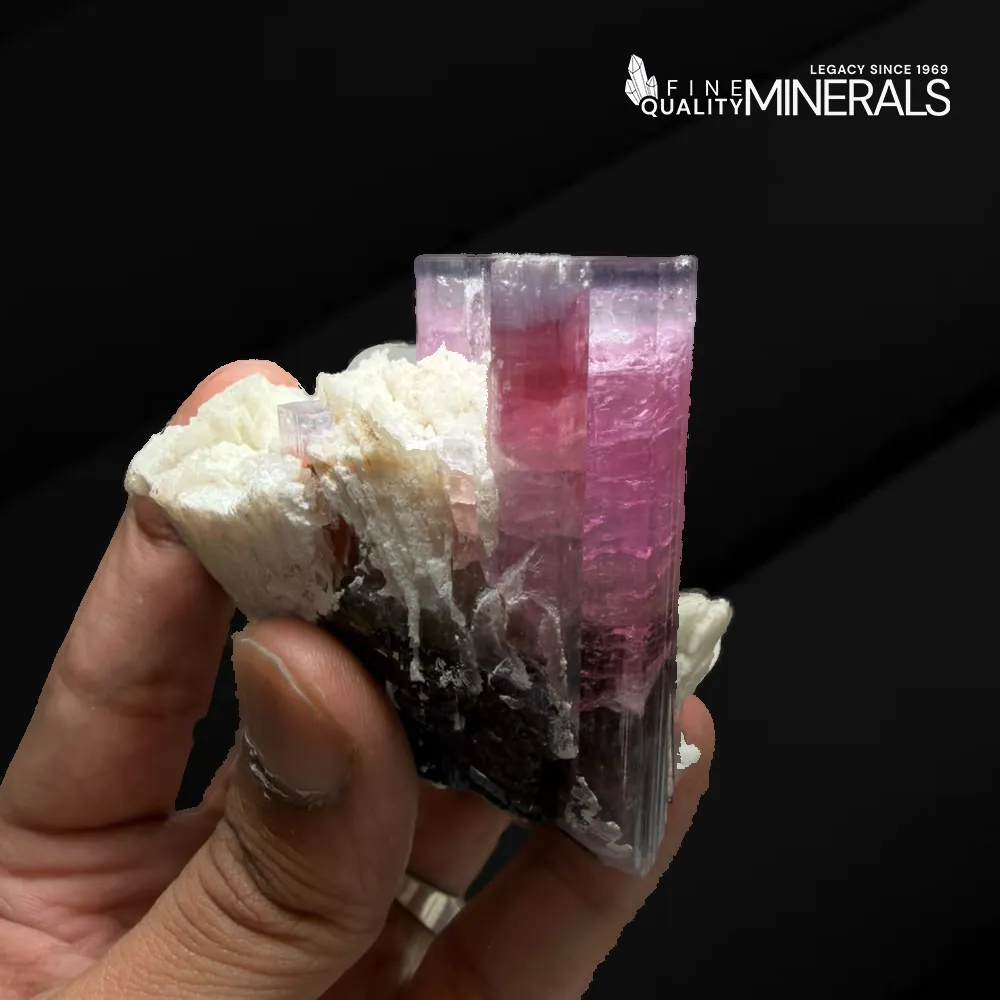
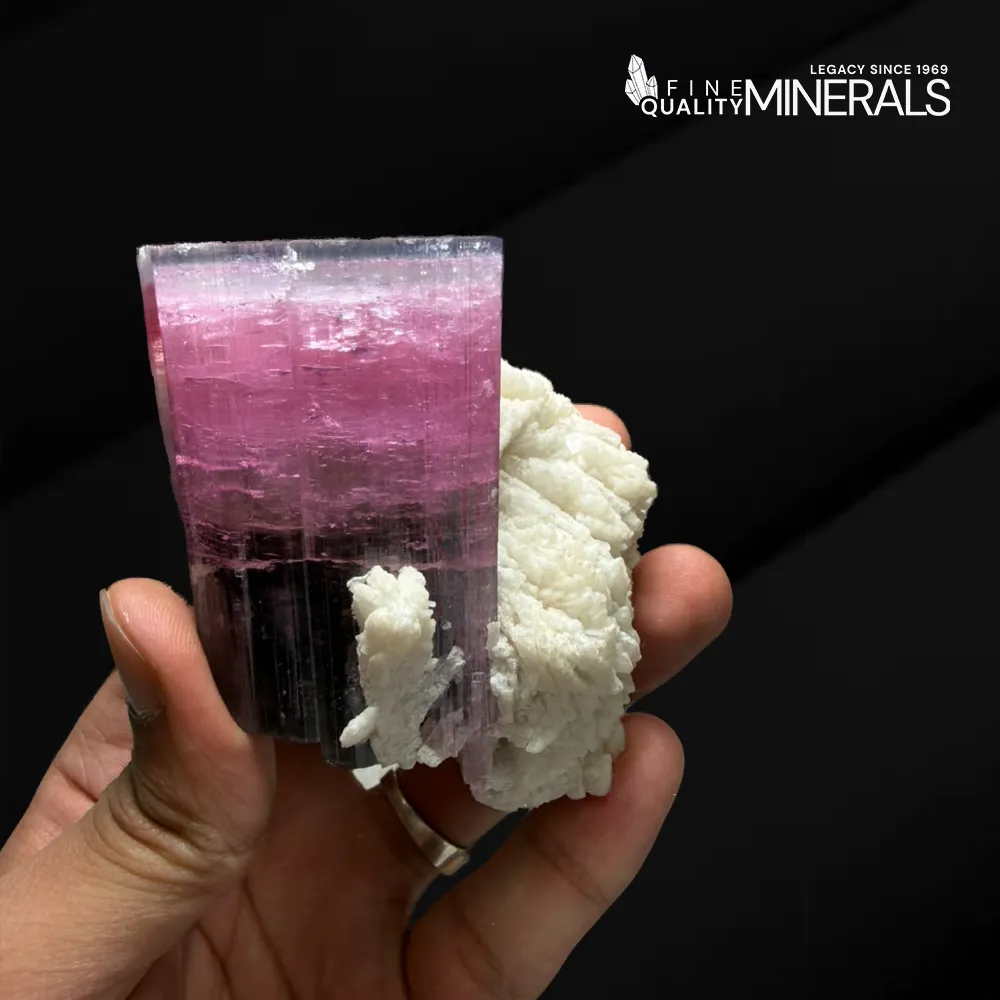
Located in the rugged mountains of Nuristan, the high-altitude pegmatites of Paprok produce what is universally considered the world’s most aesthetic multi-colored elbaite. Crystals from Paprok frequently show vivid pastel transitions—shifting smoothly from seafoam green bases to vivid raspberry-pink rubellite, topped with blue or water-clear terminations. These are often discovered naturally seated on snow-white cleavelandite rosettes, lepidolite mica, and quartz crystals. Detailed mineralogical records can be explored via the Mindat Paprok Locality Archive.
2. Gilgit-Baltistan & Khyber Pakhtunkhwa (Pakistan) — Legendary Alpine Pegmatites
Northern Pakistan is home to monumental pegmatite systems running along the Karakoram and Himalayan ranges. The most famous locality is Stak Nala, renowned for its classic bi-color tourmalines featuring dark green prisms terminated by sharp, light green caps on cleavelandite. The Shigar Valley and Haramosh mountains also produce sharp, mirror-lustrous black schorl crystals and gem-clear green elbaite prisms highly valued by academic and private collections.
3. Minas Gerais (Brazil) — Historic Prolific Pegmatites
Brazil’s pegmatite belt in Minas Gerais has produced historic tourmaline pockets for decades. World-famous operations such as the Cruzeiro and Jonas mines yielded immense cranberry-red rubellite and indicolite blue crystals. While much of this material is directed toward high-end gemstone faceting, undamaged matrix cabinet pieces remain world-class centerpieces, as documented by the Gemological Institute of America (GIA).
4. San Diego County, California & Maine (USA)
Historic North American localities, including the Pala District (Tourmaline Queen and Stewart mines) in California, produced iconic “blue-cap” rubellites on quartz matrix. Mount Mica in Maine remains the oldest recorded gem tourmaline deposit in the United States, producing deep forested greens.
5. Erongo Region (Namibia) & Madagascar
Namibia is recognized for lustrous, highly striated green and blue-green elbaite crystals often associated with smoky quartz and feldspar. Central Madagascar produces complex calcium-rich liddicoatite, prized for internal geometric color zoning seen in cross-sectional slices.
2. Locality Comparison Matrix
Evaluating natural tourmaline specimens requires comparing how different geological environments influence crystal habit, color zoning, and native host matrix:
| Mining Locality | Primary Species | Defining Characteristics | Natural Matrix Association |
|---|---|---|---|
| Paprok, Afghanistan | Polychrome Elbaite | Gem-transparent bi-colors and tri-colors, pastel pinks and greens | Cleavelandite, Lepidolite, Quartz |
| Stak Nala, Pakistan | Bi-Color Elbaite | Dark green bodies with bright green caps, sharp pinacoid terminations | Bladed Albite, Muscovite |
| Minas Gerais, Brazil | Rubellite & Indicolite | Deep cranberry reds, rich lagoon blues, large crystal dimensions | Microcline Feldspar, Smoky Quartz |
| Erongo, Namibia | Green & Blue Elbaite | High surface luster, prominent vertical striations | Smoky Quartz, Schorl |
| Antsirabe, Madagascar | Liddicoatite | Intricate trigonal internal color bands visible in slices | Pegmatite Pocket Clay |
Geological characteristics and associations across primary tourmaline pegmatite deposits.
3. Collector Valuation: What Makes a Raw Tourmaline Crystal Valuable?
Unlike faceted stones valued strictly by carat weight, the valuation of a raw mineral specimen depends on natural architectural criteria:
100% pristine, razor-sharp crystal terminations without pocket dings or contact fractures.
Crystals naturally anchored to white albite or quartz command significant premiums over loose floaters.
Glassy transparency with vibrant pleochroism, displaying contrasting colors along different crystal axes.
Completely unheated, non-irradiated, and free of artificial resin stabilization or undisclosed repairs.
4. Sourcing From the Source: The Fine Quality Minerals Advantage
Acquiring investment-grade mineral specimens directly from the Hindu Kush and Karakoram ranges often presents challenges. The majority of specimens pass through multiple intermediaries before reaching international mineral shows, which inflates pricing and obscures mining provenance.
Fine Quality Minerals operates directly from Namak Mandi, Peshawar—the primary trading corridor for minerals emerging from northern Pakistan and Afghanistan. Our physical proximity to the mines allows us to inspect and acquire pocket discoveries straight from artisanal miners.
- 100% Natural & Untreated: Every crystal we present is guaranteed untreated, uncut, and preserved in its natural geological matrix.
- Direct Pocket Provenance: Direct access to primary claims in Paprok, Stak Nala, and Skardu with verified locality attribution.
- High-Value Buyer Assurance: High-ticket specimens ($2,000+) are backed by 4K macro video inspections, direct WhatsApp consultations, and fully insured international shipping via FedEx and UPS express courier services.
Whether you are expanding a private museum collection or acquiring your first fine pegmatite crystal, explore our authentic selections or submit a custom sourcing request:
Visit our Fine Tourmaline Specimen Collection or read our collector guide on Pakistani Aquamarine Crystals.
Frequently Asked Questions About Natural Tourmaline Crystals
Where are the world’s most valuable tourmaline specimens found?
The most valuable aesthetic tourmaline specimens on matrix are mined in the pegmatites of Paprok (Nuristan, Afghanistan) and Stak Nala (Gilgit-Baltistan, Pakistan). These regions are universally recognized for pristine polychrome and bi-color elbaite crystals anchored naturally on cleavelandite matrix.
How can I verify if a raw tourmaline specimen is natural and unheated?
Natural unheated tourmalines display strong pleochroism, natural vertical prism striations, and complex internal growth tubes. They lack the unnatural, uniform neon saturation caused by laboratory irradiation or artificial heat treatment. Authentic dealers provide macro examination videos and guarantee zero thermal enhancement.
What is the difference between Paprok and Stak Nala tourmalines?
Paprok (Afghanistan) is celebrated for pastel, multi-colored crystals with transitions between pink, mint green, and blue. Stak Nala (Pakistan) is famous for distinctive dark green to black elongated prisms featuring bright green or translucent flat caps, typically resting on white bladed albite.
Where can collectors buy natural tourmaline crystals directly from Pakistan and Afghanistan?
Fine Quality Minerals provides direct mine-to-market sourcing from Namak Mandi, Peshawar. We supply natural, uncut, and untreated tourmaline specimens sourced directly from active mines in Afghanistan and Pakistan, shipped worldwide via fully insured FedEx and UPS couriers.