
Blog
Topaz Crystals: A Collector’s Guide to Natural Specimens

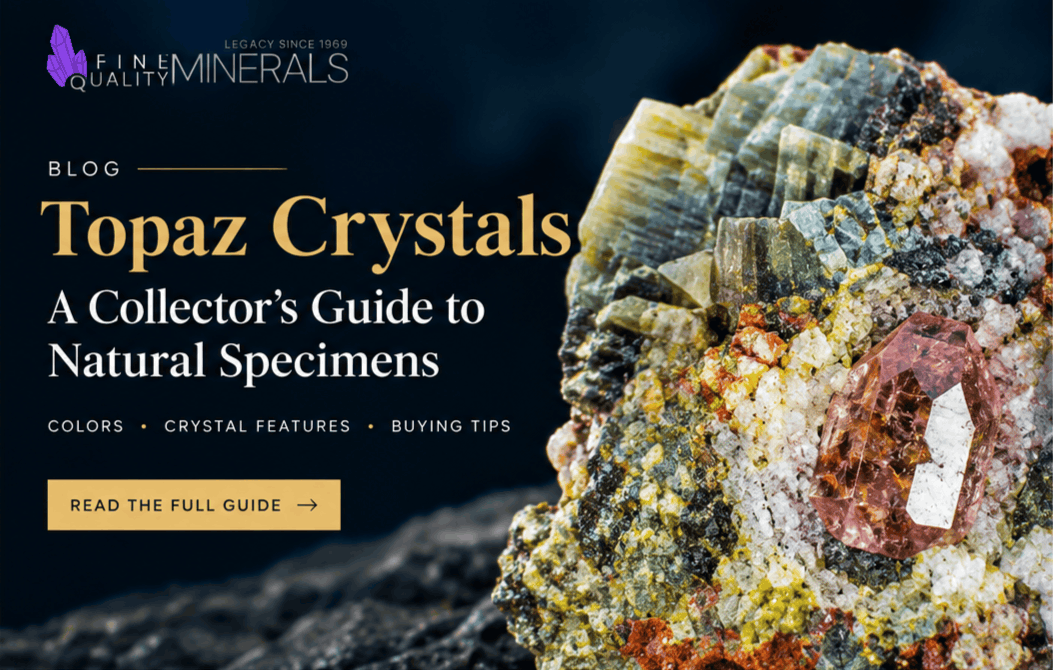
Topaz Crystals: A Collector’s Guide to Natural Specimens
From clear, glass-like crystals to uncommon pink examples, topaz offers mineral collectors a fascinating combination of crystal structure, color, and geological history. Learn what to look for before adding a natural topaz specimen to your collection.
The appeal of topaz crystals goes beyond their use in jewelry. A well-preserved natural crystal lets you appreciate the mineral’s original form, surface, transparency, and geological character. For collectors, those details can be just as important as color. This guide explains the basics of the topaz mineral, introduces common color varieties, and outlines practical points to consider when choosing and caring for a specimen.
What Is the Topaz Mineral?
Topaz is a naturally occurring aluminium fluorosilicate mineral. It forms in geological environments that include granitic pegmatites, high-temperature quartz veins, and cavities in some igneous rocks. Its crystals often grow in elongated, prismatic forms, although the shape and surface features vary from specimen to specimen.
On the Mohs scale, topaz has a hardness of 8, which means it resists scratching better than many common minerals. However, hardness should not be confused with toughness. Topaz has perfect cleavage in one direction, so a sharp impact can split or damage a crystal. This combination makes topaz interesting to study and important to handle carefully.
For collectors, the term topaz crystal specimen usually refers to a natural mineral piece selected for its crystal form, color, transparency, luster, condition, or locality. A specimen may be a single crystal or a group of crystals, and not every example is transparent or gem-quality. Natural surface features and inclusions can also contribute to a specimen’s character.

Topaz Crystal Colors: Blue, Pink, Green, and White
Topaz occurs in a broad range of colors, including colorless, white, yellow, brown, blue, green, pink, and reddish tones. The color of a particular crystal depends on its composition and color centers, and some commercial topaz is treated to change or intensify its appearance. For this reason, color alone does not establish whether a specimen’s color is natural or treated.
Blue topaz
Blue topaz is widely seen in the jewelry market. Much of the blue material sold commercially has been treated, so buyers should not assume that a vivid blue color developed naturally. For a collector specimen, check the listing’s treatment disclosure and provenance.
Pink topaz
Pink to reddish topaz is especially appealing to collectors who enjoy less common colors. Color saturation, transparency, crystal form, condition, and documented locality all help distinguish one specimen from another.
Green topaz
Green topaz is less commonly encountered than many blue jewelry stones. The exact shade and appearance vary, so evaluate the individual specimen rather than relying on a color name alone.
White topaz
White or colorless topaz can reveal crystal geometry and internal features without a strong body color dominating the view. These pieces may suit collectors interested in form, clarity, and mineral identification.
Searches for terms such as blue topaz, pink topaz, green topaz, white topaz, and topaz gemstone often mix jewelry shopping with mineral collecting. If your goal is to acquire a natural specimen, read the complete product description and look for clear photographs, dimensions, condition notes, and treatment information where known.
It is also useful to distinguish topaz from similarly named materials. “Mystic topaz” is a trade name commonly associated with topaz that has received a surface coating to create an iridescent effect. Ask the seller how the appearance was produced. Topaz and citrine are also different minerals: topaz is not simply another name for yellow quartz.
What Should Collectors Look for in a Topaz Crystal Specimen?
There is no single feature that makes every topaz specimen desirable. Collectors typically assess several factors together, with different priorities depending on whether they prefer aesthetic display pieces, mineralogical examples, or crystals from a particular locality.
1. Crystal form and termination
Look at the overall shape and the crystal’s termination—the natural faces at its end. Well-defined faces and an attractive, balanced form can make a small specimen visually compelling. Examine close-up photographs to understand whether edges are natural, chipped, repaired, or difficult to see.
2. Color and transparency
Color can be a major part of a specimen’s appeal, but photographs can be affected by lighting, white balance, and editing. Compare images taken from different angles when available. Transparency may also vary across a crystal; some specimens are clear while others are cloudy, included, or partly opaque.
3. Luster and surface condition
A bright, glass-like luster can emphasize the crystal’s natural geometry. Look for disclosed chips, fractures, abrasions, repairs, or areas of contact with surrounding minerals. These features are not automatically a reason to reject a specimen, but they should be understood before purchase.
4. Locality and reliable information
Locality gives a specimen geological context. A specific mine or region, when reliably documented, can make a piece more meaningful to collectors studying mineral occurrences. Treat locality claims as listing information unless independently documented; do not assume a specimen has a laboratory certificate or treatment report unless the seller explicitly states that it does.
| Feature | What to check |
|---|---|
| Crystal shape | Visible faces, termination, proportions, and overall form |
| Color | Hue, saturation, consistency, and whether treatment information is provided |
| Clarity | Transparency, inclusions, cloudy zones, and internal fractures visible in photos |
| Condition | Chips, damage, repairs, contact points, and any disclosed restoration |
| Provenance | Stated mine or region, dimensions, and consistency of the seller’s description |
A Pink Topaz Specimen from Katlang, Pakistan
Pakistan is known among mineral collectors for a range of notable mineral localities. One example listed by Fine Quality Minerals is a Rare Pink Topaz Specimen from the Ghundo Mine, Katlang, Khyber Pakhtunkhwa, Pakistan. The listing describes a reddish-pink hue, a subtle rainbow effect, gemmy clarity, and a bright luster.

Rare Pink Topaz Specimen
Locality: Ghundo Mine, Katlang, Khyber Pakhtunkhwa, Pakistan
Main crystal: 1.5 cm tall
Secondary crystal: 1 cm tall
Listing description: Reddish-pink color, subtle rainbow effect, clarity and luster; described by FQM as damage-free.
Review the current product page for the latest price, availability, photographs, and full listing details.
This example illustrates why the full description matters. The color is only one part of the specimen: the stated locality, dimensions, condition, and photographs help a buyer judge how the piece might fit into a collection. If you need additional angles or want to clarify a detail before purchasing, contact the seller before placing your order.
How to Care for Topaz Crystals
Although topaz is relatively hard, its perfect cleavage makes careful handling important. Avoid dropping a specimen or knocking it against other minerals. When moving it, support the piece from beneath rather than gripping a delicate termination or projecting crystal edge.
- Handle over a padded surface. This reduces the risk of breakage if the specimen slips.
- Store pieces separately. Keep topaz away from harder minerals or loose objects that could scratch or strike it.
- Use gentle cleaning methods. Start with a soft brush and avoid harsh chemicals or sudden temperature changes. If the specimen has a matrix, repairs, coatings, or unknown treatments, ask a knowledgeable seller before using water or cleaning products.
- Display securely. Use a stable stand or cabinet so the crystal cannot easily tip over.
For more background on topaz properties, consult the Gemological Institute of America’s topaz guide and the mineral data published by Mindat’s Topaz mineral page. These resources are useful companions to a seller’s specific specimen description.
Frequently Asked Questions About Topaz Crystals
Are natural topaz crystals valuable?
Value depends on factors such as color, size, crystal form, transparency, condition, locality, provenance, and buyer demand. A specimen’s value cannot be established from color or a photograph alone.
Is blue topaz always natural in color?
No. Much of the blue topaz used commercially is treated to achieve its color. If treatment status matters to you, check the listing or request clarification rather than assuming the color is natural.
Is topaz harder than quartz?
Yes. Topaz has a Mohs hardness of 8, while quartz has a hardness of 7. However, topaz has perfect cleavage, so it can still break if struck in a vulnerable direction.
What is the difference between topaz crystals and topaz jewelry?
A topaz crystal specimen is collected in its natural mineral form, sometimes with its matrix. Topaz jewelry usually features a cut and polished stone set in a wearable design. Collectors often focus more on natural crystal shape, locality, and condition.
How can I choose a topaz crystal specimen online?
Review multiple photographs, exact dimensions, locality, condition notes, and treatment disclosures where known. Ask the seller about any unclear details before ordering, and check the store’s shipping and return policies.
Can I clean a topaz crystal with household chemicals?
Avoid assuming that a household cleaner is safe. Because topaz can cleave and specimens may have coatings, repairs, or attached matrix minerals, begin with gentle dry cleaning and ask for specimen-specific advice before using liquids or chemicals.
Find a Topaz Specimen for Your Collection
A good mineral collection is built one carefully chosen specimen at a time. Compare the crystal’s form, color, condition, dimensions, and locality—and ask questions whenever a listing leaves something unclear.
Explore the Fine Quality Minerals website, review the pink topaz specimen from Katlang, or learn how to order from FQM.
Editorial note: Color and treatment statements in this guide describe topaz generally. Always use the individual product listing or direct seller confirmation for the specific treatment status, condition, and availability of a specimen.