
Blog
The Ultimate Guide to Natural Peridot Crystal: Meaning, Properties, and Value

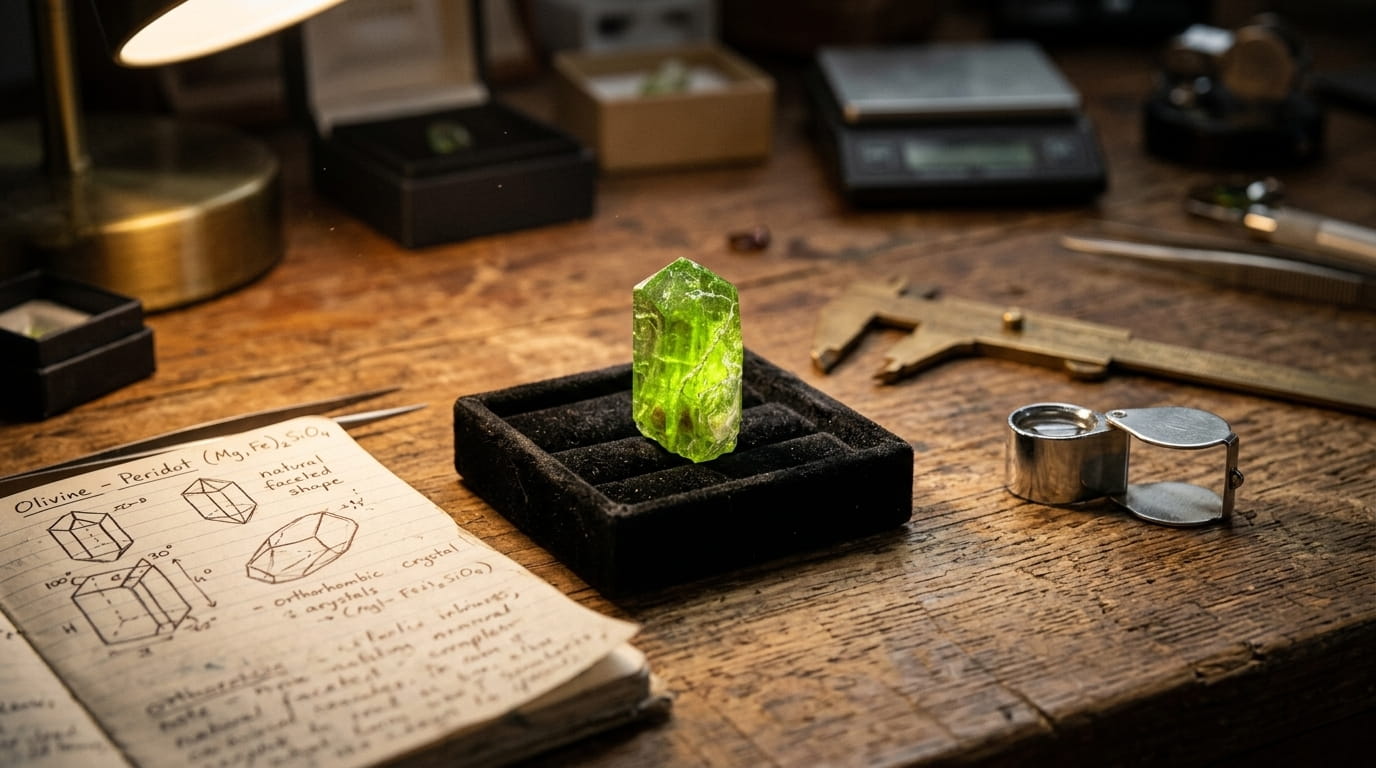

Whether you are looking to buy a peridot gemstone for a high-end mineral collection or seeking a natural peridot crystal for its metaphysical properties, understanding this vibrant green mineral requires examining its geological origins and structural clarity.
While peridot is commonly found globally in granular volcanic nodules, the high-altitude deposits at Sapat Gali in Kohistan, Pakistan, are considered the gold standard. Mined above 4,000 meters, these pegmatitic veins yield sharp, free-standing prismatic crystals measuring several centimeters across, setting a global benchmark for forsterite olivine.
Geological Properties: Peridot vs Emerald
Collectors often compare peridot vs emerald due to their striking green color, but they are entirely different minerals with distinct geological formations.
Emerald is a variety of beryl colored by trace impurities of chromium or vanadium. Peridot is the gem-quality variety of forsterite olivine. Peridot is idiochromatic, meaning its color comes from the fundamental chemical composition of the mineral itself (specifically iron) rather than external impurities. The vibrant apple green, rich olive, and deep lime-green hues of Kohistan peridot result from ideal magnesium-to-iron geological ratios.
A pristine Sapat Gali peridot is highly sought after because it features remarkable transparency and is often found perched securely on natural matrix associations like lustrous dark green serpentine, magnetite octahedrons, or snowy calcite.
Value Factors: Buying Premium Peridot
When evaluating a peridot crystal for sale, value is dictated by transparency, color saturation, crystal geometry, and natural inclusions.
- Color: The most valuable stones exhibit a pure, vibrant grass-green without brownish undertones.
- Clarity: Gem-grade Kohistan peridot is prized for its flawless, unheated, and unpolished optical clarity.
- Rare Inclusions: Pieces featuring rare Ludwigite or Rutile needle inclusions command premium prices from specialized collectors.
- Matrix: Crystals naturally attached to a contrasting serpentine or calcite matrix carry a higher premium for display aesthetics.

Peridot Crystal Meaning and Benefits
As the traditional August birthstone, the peridot birthstone meaning is deeply tied to themes of light, vitality, and renewal. Historically referred to as the “Gem of the Sun” by ancient Egyptians, peridot crystal meaning revolves around dispelling darkness, protecting the wearer, and fostering emotional balance.
For those exploring peridot crystal spiritual meaning, the stone is strongly associated with the heart chakra (Anahata) and the solar plexus chakra (Manipura). This dual connection aligns personal will with compassion, making it a highly sought-after stone for emotional clarity and forward momentum.
What is Peridot Good For?
When evaluating peridot healing properties, both crystal practitioners and gem enthusiasts value its restorative energy.
- Emotional Healing: The metaphysical properties are frequently used to overcome jealousy, resentment, and bitterness, helping to dissolve negative behavioral patterns.
- Daily Practice: Wearing a peridot crystal necklace, ring, or bracelet keeps the stone within your auric field, promoting a continuous sense of calm and focus.
How to Cleanse Peridot Crystal
Peridot sits at a 6.5 to 7 on the Mohs hardness scale. It is sensitive to extreme temperature changes, acids, and harsh chemicals. To safely cleanse your specimen:
| Method | Instructions | Warnings |
|---|---|---|
| Physical Cleaning | Use lukewarm water, mild dish soap, and a very soft brush to remove dust. | Never use ultrasonic or steam cleaners. Avoid sudden temperature changes. |
| Energetic Cleansing | Rest the crystal on a bed of clear quartz or selenite overnight. | Avoid prolonged, intense direct sunlight to prevent thermal shock to matrix associations. |
Frequently Asked Questions
Where is the best peridot found?
Can peridot go in water?
How can you tell a real peridot crystal?
Acquire World-Class Kohistan Peridot
All Fine Quality Minerals specimens feature documented mine-to-market provenance from Kohistan. Explore our collection of unheated, unpolished natural peridot crystals selected strictly for optical clarity and aesthetic matrix associations.