
Blog
The Ultimate Collector’s Guide to Paprok Tourmaline: Color, Matrix, and Value

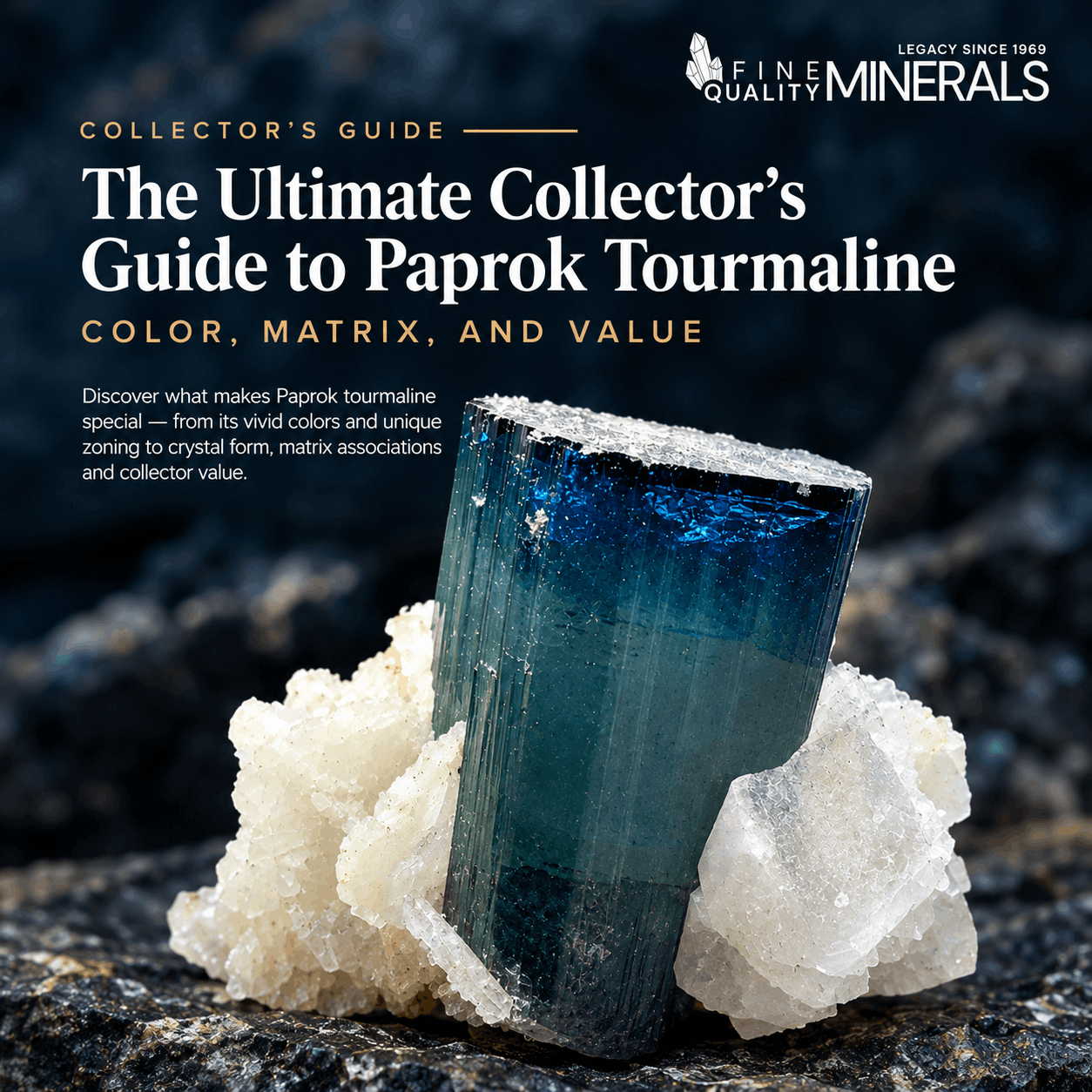
Paprok tourmaline specimens are prized not simply for their color, but for the remarkable combination of crystal form, zoning, transparency, and natural associations that make an individual Afghan tourmaline exceptional.
Located in Nuristan, Afghanistan, Paprok is well known among mineral collectors for attractive crystals, including blue, pink, green, and bicolor tourmaline material. The best examples of tourmaline on matrix combine geological interest with strong visual presence.
Three Faces of Paprok Tourmaline Specimens
These Fine Quality Minerals specimens demonstrate why Paprok tourmaline should be evaluated as a complete mineral specimen rather than by color alone.
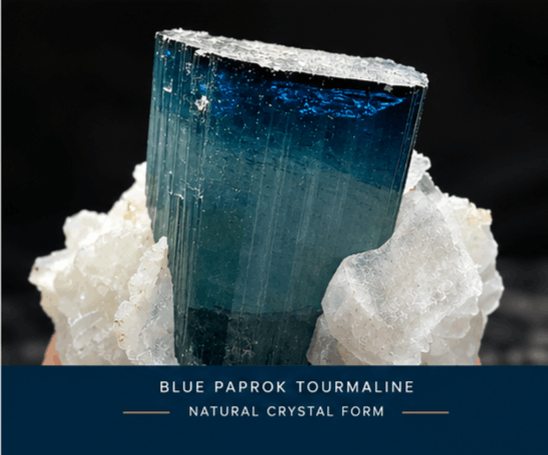
Blue Paprok Tourmaline
Strong blue coloration, a broad prismatic crystal, and contrasting pale matrix make this type of specimen especially attractive for display.
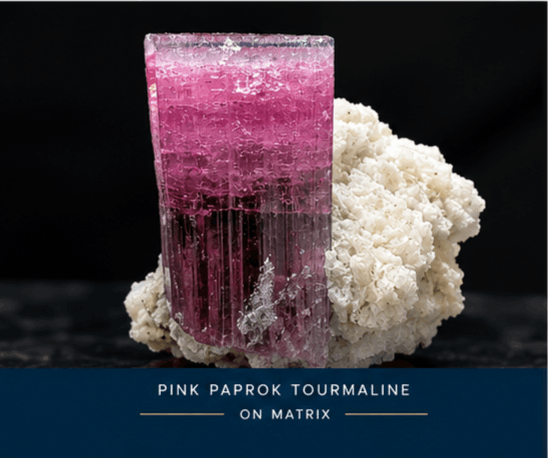
Pink Paprok Tourmaline
Pink coloration combined with strong crystal form and a natural matrix association creates a classic collector specimen.
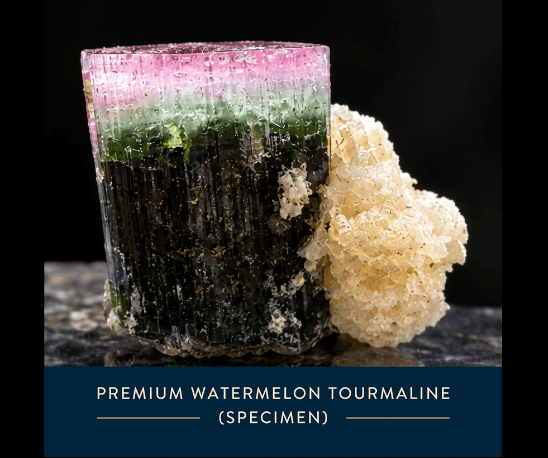
Premium Watermelon Paprok Tourmaline
Distinct pink, green, and deep dark color zones give this premium Paprok watermelon tourmaline a striking visual character. Its broad crystal form, natural vertical striations, and contrasting pale matrix make it a compelling specimen for fine mineral collectors.
Afghan Tourmaline Color and Zoning: What Collectors Should Look For
Color is usually the first feature that attracts attention, but experienced collectors look beyond whether a specimen is simply pink, green, or blue. Hue, tone, saturation, and the distribution of color all influence the appearance of a crystal.
A smaller crystal with exceptional zoning, transparency, and crystal form can be more desirable than a much larger crystal with weaker visual qualities.
What Makes Premium Paprok Watermelon Tourmaline Special?
Watermelon tourmaline is admired for its distinctive combination of pink and green coloration, often accompanied by darker zones that add depth and contrast. In this Paprok specimen, the vivid pink upper section transitions into a green band before deepening into a dark lower portion, creating a dramatic, naturally zoned appearance.
For collectors, the appeal extends beyond the color combination. The proportions of each zone, the clarity of the transitions, the crystal’s form and surface condition, and its association with the pale matrix all contribute to its overall aesthetic appeal.
When evaluating a specimen like this, examine how clearly the different color zones can be distinguished, how they complement the crystal’s shape, and how the matrix enhances the overall presentation. These features, considered alongside condition, locality documentation, and provenance, help determine its desirability as a fine mineral specimen.
Why Tourmaline on Matrix Can Transform a Specimen
A loose crystal can be beautiful, but tourmaline on matrix can provide a much stronger geological story.
The pale matrix surrounding Paprok tourmaline can create dramatic contrast against pink, green, or blue crystals. It also shows part of the natural environment in which the crystal formed.
The key is quality. A natural, stable, and aesthetically balanced matrix association can significantly improve a specimen’s presentation.
Paprok Tourmaline Value: Collector’s Checklist
There is no universal price-per-gram formula for fine mineral specimens. Instead, collectors evaluate several characteristics together.
| Factor | What to Examine | Collector Importance |
|---|---|---|
| Color | Hue, saturation and tone | Strong and attractive color can create immediate visual impact. |
| Color Zoning | Sharpness and distribution | Distinct zoning can make a crystal significantly more interesting. |
| Crystal Form | Faces, proportions and geometry | Well-developed crystals are highly desirable in mineral collections. |
| Termination | Natural and complete termination | A sharp intact termination preserves the crystal’s natural architecture. |
| Transparency | Gemmy areas and internal clarity | Can enhance color and allow internal features to be appreciated. |
| Luster | Surface brightness | Strong luster gives the crystal greater visual presence. |
| Matrix | Natural association and composition | Can provide contrast, geological context and display appeal. |
| Condition | Chips, fractures and repairs | Condition should always be considered before purchasing. |
| Locality | Specific locality and documentation | Important for collectors building locality-focused collections. |
| Overall Aesthetics | How the entire specimen presents | Often the deciding factor between an attractive and exceptional specimen. |
How to Buy Paprok Tourmaline With Confidence
Before purchasing a valuable Paprok specimen, examine these points carefully:
- Confirm the specific locality.
- Examine the natural crystal termination.
- Check for chips and fractures.
- Ask about repairs or restoration.
- Inspect the crystal-to-matrix contact.
- Request photographs from several angles.
- Check specimen dimensions and proportions.
- Review available provenance information.
Frequently Asked Questions
Is Paprok tourmaline rare?
What colors does Paprok tourmaline have?
What makes bicolor tourmaline valuable?
Is tourmaline on matrix more valuable?
What makes Paprok tourmaline valuable?
Looking for Paprok Tourmaline Specimens for Your Collection?
Explore Fine Quality Minerals’ collection of natural tourmaline specimens and compare crystals by color, zoning, matrix, condition, and overall collector appeal.