
Blog
Famous Aquamarine Mines in the World: A Collector’s Provenance Guide

Famous Aquamarine Mines in the World
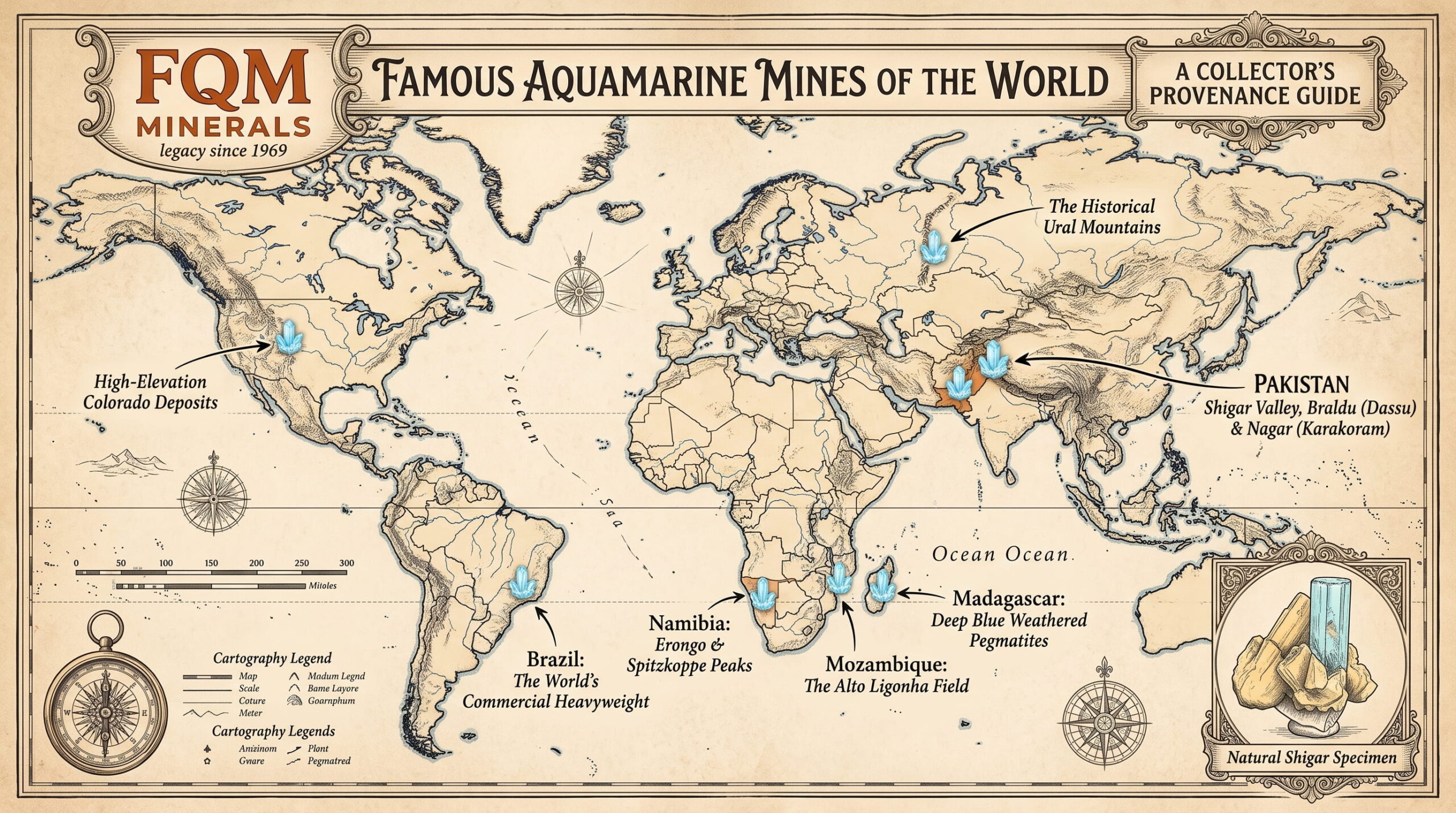
Aquamarine comes from granitic pegmatites and metamorphic veins scattered across four continents, but only a handful of valleys and districts produce the glass-clear crystals that end up in museums and private collections. While cut gems come from tons of industrial gravels, specimen collectors judge a deposit by crystal shape, termination quality, and the host rock the stone grew on.
Understanding the geology behind these mines explains why a stone from the Karakoram mountains looks entirely different from one found in the red clays of Madagascar or the decomposed granites of Brazil.
Pakistan: The Karakoram Alpine Pegmatites
Northern Pakistan is the global centre for sharp, matrix-supported aquamarine specimens. Unlike alluvial deposits where water rolls crystals into smooth pebbles, Pakistan’s high-altitude pegmatites preserve pristine hexagonal prisms frozen in place against snow-white feldspar.
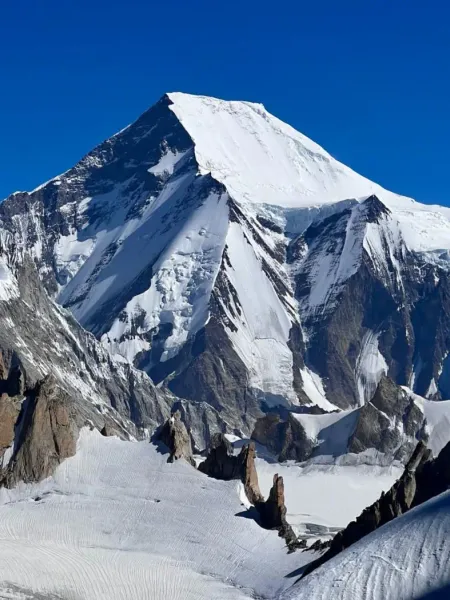
Shigar Valley, Skardu District
The Shigar Valley cuts through the Karakoram Range at altitudes between 3,000 and 4,500 meters. Miners work miarolitic pockets inside complex granite pegmatites that intruded during the collision of the Indian and Asian tectonic plates.
The typical crystal habit here is an elongated, textbook hexagonal prism capped with a perfectly flat basal pinacoid face. Crystals range from pale ice-blue to medium sky-blue. What makes Shigar specimens distinct is their association with pure white, bladed cleavelandite albite. Often, a single gem-clear aquamarine prism emerges from a rosette of white feldspar blades, occasionally flanked by black schorl tourmaline or sharp books of muscovite mica.
Dassu and Bhasha, Braldu Valley
Further up the Braldu River gorge sits Dassu, a mining village perched on steep granite cliffs. The pegmatites here produce some of the deepest blue tones in Pakistan, often showing a saturated greenish-blue before any heat treatment. Dassu crystals tend to be thicker and more blocky than Shigar material. Many display modified pinacoid terminations with stepped pyramidal faces.
Miners at Dassu work entirely by hand. Local teams hike up vertical rock faces, pack manual drills and low-velocity black powder on their backs, and open pockets inside narrow tunnels. Because high explosives shatter gem beryl, miners use small charges to relieve pressure around a pocket, then extract the crystals using chisels, pry bars, and screwdrivers.
Nagar and Hunza
In the Hunza and Nagar valleys of Gilgit-Baltistan, aquamarine occurs in hydrothermal veins and pegmatites cutting through metamorphic marbles and schists. Nagar material frequently displays a distinct tabular habit: short, flat hexagonal plates rather than long columns. These crystals are typically pastel blue to almost colorless, prized for their glass-like transparency and association with pink apatite and fluorite.
Brazil: The World’s Commercial Heavyweight
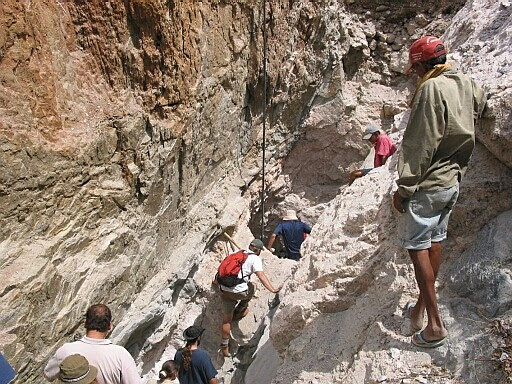
Brazil has supplied the global jewelry trade with more aquamarine rough than any other country. Most production concentrates in the state of Minas Gerais, inside the Araçuaí pegmatite district, along with deposits in Bahia and Espírito Santo.
The Medina and Teófilo Otoni Deposits
Around the gem-trading hub of Teófilo Otoni, thousands of granitic pegmatites have weathered into soft, kaolinised clay. Miners can dig out massive crystals with simple water jets and hand tools because the surrounding feldspar has decomposed into mud over millions of years.
Brazilian crystals are famous for size. In 1910, the Papamel mine near Marambaia yielded the legendary Martha Rocha aquamarine, a single crystal weighing 110.5 kilograms (over 243 pounds) that was completely transparent from end to end. In the late 1980s, the Pedra Azul deposit yielded the Dom Pedro aquamarine, an irregularly shaped 45-kilogram crystal that gem artist Bernd Munsteiner carved into the famous 10,363-carat obelisk now housed in the Smithsonian National Museum of Natural History.
Most Brazilian rough carries a greenish-blue tint in the ground. Because commercial jewellery buyers prefer a pure sky-blue, dealers routinely heat Brazilian rough to 400°C to 450°C, which alters the oxidation state of trace iron from Fe³⁺ to Fe²⁺ and permanently removes the yellow-green component.
Madagascar: Deep Blue Weathered Pegmatites
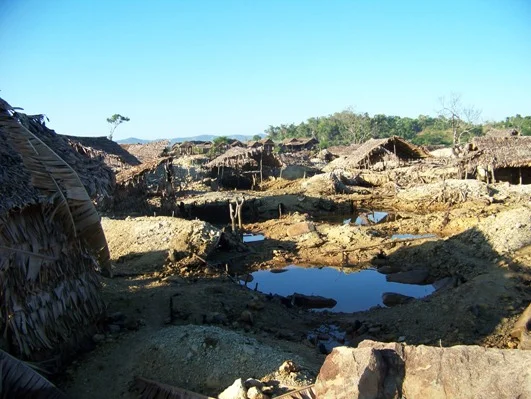
Madagascar sits on the ancient Mozambique Orogenic Belt, a geological zone rich in gem-bearing pegmatites that formed during the assembly of the Gondwana supercontinent around 500 million years ago.
Ilakaka and the Southern Alluvial Fields
While Ilakaka is best known for sapphires discovered in 1998, the alluvial gravels also yield rounded pebbles of water-worn aquamarine. Miners dig through gravel layers called banc beneath red laterite soils, using hand shovels and wooden washing pans.
Central Highlands Pegmatites (Anjanabonoina and Antsirabe)
The primary specimen sources lie in the central plateau. The pegmatite fields around Antsirabe and Betafo yield prismatic aquamarine alongside tourmaline and morganite. Malagasy aquamarine is recognized for intense natural saturation without heat treatment, ranging from rich turquoise hues to dark blue tones that rival treated material from other countries.
Mozambique: The Alto Ligonha Pegmatite Field
Mozambique’s Zambezia province hosts the Alto Ligonha pegmatite field, one of the largest lithium-cesium-tantalum (LCT) pegmatite belts in the world. Deposits like Muiane, Naipa, and Marropino were worked heavily throughout the mid-20th century.
Aquamarine from Alto Ligonha occurs in giant, zoned pegmatite dikes. Crystals from this region often display deep, oceanic blue tones, traditionally called “Santa Maria Africana” in the trade to compare them to the legendary, mined-out Santa Maria de Itabira deposits of Brazil. While the mines produce exceptional rough for cutting, pristine matrix specimens are scarce because historic operations used heavy industrial equipment to extract tantalum and columbite, shattering most delicate crystal associations.
Namibia: Erongo and the Spitzkoppe Peaks
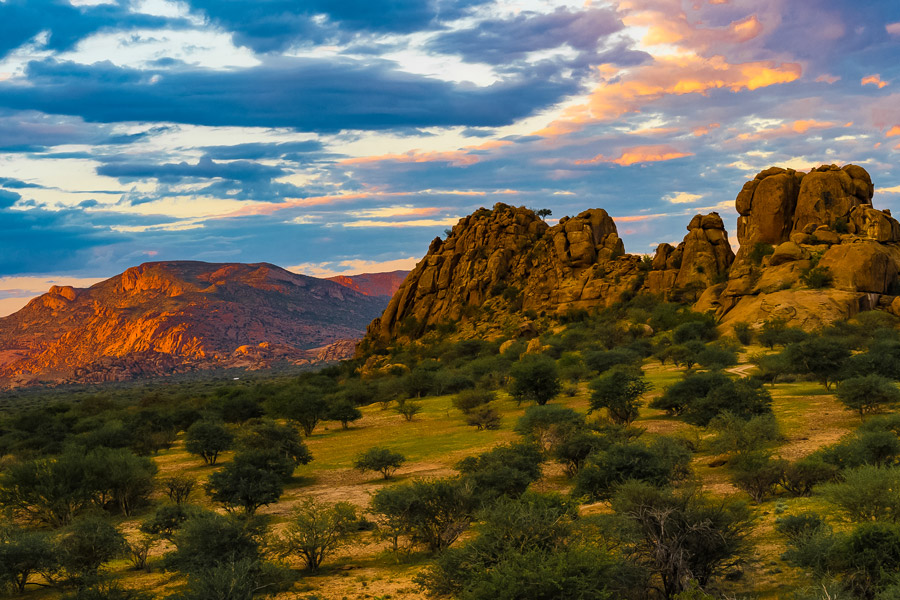
Namibia produces distinctive mineral specimens where aquamarine forms in miarolitic cavities inside granitic volcanic complexes.
The Erongo Mountains
The Erongo complex is an eroded circular volcanic structure rising above the Namib Desert. Local miners, known as small-scale miners, climb the rugged granite cliffs around Usakos and Karibib to locate crystal-bearing pockets.
Erongo aquamarine crystals are instantly recognizable. They typically form slender, highly lustrous hexagonal prisms, often with rich sky-blue coloration. Rather than albite, Erongo crystals frequently grow attached to jet-black schorl tourmaline needles, smoky quartz, and purple fluorite cubes. The contrast between bright blue beryl and velvety black tourmaline makes Erongo pieces favorites among specimen collectors.
Klein Spitzkoppe
West of Erongo, the granite inselberg of Klein Spitzkoppe has produced aquamarine, topaz, and yellow beryl (heliodor) since the late 1800s. Crystals here weather out of narrow pegmatite veins into decomposed scree slopes at the base of the mountains.
Russia: The Historical Ural Mountains
Russia holds historical significance in the beryl trade. In the 18th and 19th centuries, the eastern slopes of the Ural Mountains supplied the Russian Imperial court and European jewelers with some of the finest beryls known.
The Mursinka district, north of Yekaterinburg, produced gem aquamarine from pegmatite cavities hosted in granite. These crystals were famous for square, tabular terminations and wine-yellow or sea-green cores transitioning to pale blue tips. Further east in Siberia, the Adun-Cholon range in Nerchinsk produced deep-toned aquamarines associated with topaz. While commercial operations in Russia have ceased, Ural specimens remain prized historical items in museum collections.
United States: High-Elevation Colorado Deposits
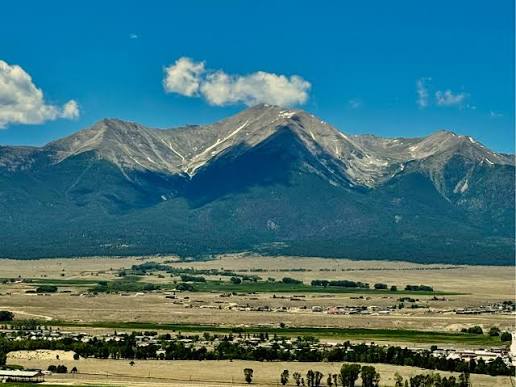
Commercial aquamarine mining in the United States is limited, but one locality stands out for quality and extreme working conditions: Mount Antero in the Sawatch Range of Chaffee County, Colorado.
At elevations exceeding 4,000 meters (over 13,000 feet), pegmatites and quartz veins cut through the Mount Antero granite. Miners contend with freezing temperatures, short summer working seasons of roughly eight weeks, and frequent lightning storms. The crystals found here are small compared to Pakistani or Brazilian pieces, rarely exceeding 5 to 7 centimeters, but they display a distinct turquoise-blue hue and sharp terminations. In 1965, Colorado officially designated aquamarine as its state gemstone.
Global Aquamarine Deposits Compared
| Country | Key Mining Areas | Host Rock & Geology | Signature Visual Traits | Primary Use |
|---|---|---|---|---|
| Pakistan | Shigar, Dassu, Bhasha, Nagar | High-altitude granitic pegmatites | Hexagonal columns on white bladed albite; water-clear | High-end matrix display specimens |
| Brazil | Minas Gerais, Bahia, Teófilo Otoni | Decomposed weathered pegmatite dikes | Large crystals; light to medium blue after heating | Calibrated jewelry, large carved gems |
| Madagascar | Antsirabe, Ilakaka, Betafo | Alluvial gravels and metamorphic pegmatites | Deep natural greenish-blue; unheated saturation | Gemstone faceting, mineral collections |
| Namibia | Erongo Mountains, Spitzkoppe | Granite miarolitic cavities | Sharp blue prisms anchored to black schorl and fluorite | Aesthetic collector specimens |
| Mozambique | Alto Ligonha, Muiane | Zoned LCT pegmatite dikes | Intense dark blue (“Santa Maria Africana”) | High-value cut gems |
| United States | Mount Antero (Colorado) | High-alpine granite miarolitic veins | Slender light blue to cyan prisms on smoky quartz | American regional collections |
Geological Properties and How Crystals Form
Aquamarine belongs to the beryl mineral family, with a chemical composition of beryllium aluminum silicate: Be₃Al₂(SiO₃)₆.
Pure beryl is completely colourless (known as goshenite). The distinctive blue to greenish-blue colour of aquamarine comes from trace amounts of iron substituting into the crystal lattice during hydrothermal growth:
- Ferrous Iron (Fe²⁺): When Fe²⁺ ions occupy interstitial channels or aluminium octahedral sites within the beryl structure, they absorb light in the red and infrared spectrum, producing pure sea-blue tones.
- Ferric Iron (Fe³⁺): When Fe³⁺ is present alongside Fe²⁺, the stone absorbs light in the blue spectrum as well, creating a yellow or greenish-blue tint.
Aquamarine crystallises in the hexagonal crystal system, forming six-sided prisms with striations running parallel to the long axis (c-axis). It has a Mohs hardness of 7.5 to 8, no distinct cleavage, and an uneven to conchoidal fracture. These physical characteristics allow natural crystals to survive extreme geological uplift and weathering inside mountain pockets.
What Collectors Look for in a Specimen
When private collectors and institutions evaluate an aquamarine specimen, they look past raw carat weight to grade five key criteria:
- Undamaged Terminations: The top faces of the crystal must be free of pocket damage, contact bruises, or chips caused during blasting.
- Matrix Association: A loose crystal detached from its host rock loses substantial value. An intact piece where the beryl prism sits naturally on undisturbed albite or quartz commands an immediate premium.
- Internal Transparency: The crystal should be clear from its termination down into the matrix, without clouds of dense fractures or milky inclusions.
- Natural Colour Saturation: Untreated, unheated crystals with rich natural blue colour are far rarer than pale stones, especially when verifiable provenance is provided.
- Aesthetic Balance: The balance between crystal height, matrix size, and secondary mineral associations (like mica or schorl) defines true museum-grade quality.
Frequently Asked Questions
Which country produces the highest quality aquamarine?
For cut gemstones, Brazil and Mozambique produce large volumes of clean, saturated rough. For natural display specimens on native matrix, Pakistan’s Skardu district (including Shigar and Dassu) produces the finest hexagonal crystals on clean white albite matrix.
How can you tell if an aquamarine is natural and untreated?
Untreated aquamarine often displays subtle dichroism, showing blue from one angle and a slight greenish-blue or near-colorless tone from another. Heated stones show a uniform pure blue with no greenish secondary hue. Under magnification, natural stones display delicate two-phase inclusions (liquid and gas bubbles) and growth tubes parallel to the crystal length.
Why is Pakistani aquamarine prized over Brazilian material for collections?
Brazilian material is typically mined from soft, decomposed clay where crystals fall loose from the rock. Pakistani aquamarine is extracted directly from hard granite pegmatite cavities, allowing miners to preserve the crystal attached to its original matrix of bladed cleavelandite and black tourmaline.
Does natural aquamarine fade in sunlight?
No. Unlike minerals like amethyst or fluorite, which can fade under prolonged UV exposure due to unstable colour centres, aquamarine’s blue colour is caused by stable iron ions bonded directly inside the silicate lattice. It will not fade in normal light.
Curate Your Natural Aquamarine Collection
Whether you want to build a private mineral cabinet or acquire an investment-grade display piece, verified geological provenance is essential.
Explore our hand-selected inventory to buy natural aquamarine of pakistan, featuring unheated, damage-free hexagonal crystals preserved on native cleavelandite matrix directly from Dassu and Shigar.