
Blog
Raw Aquamarine Crystal: How to Evaluate Color, Quality and Value

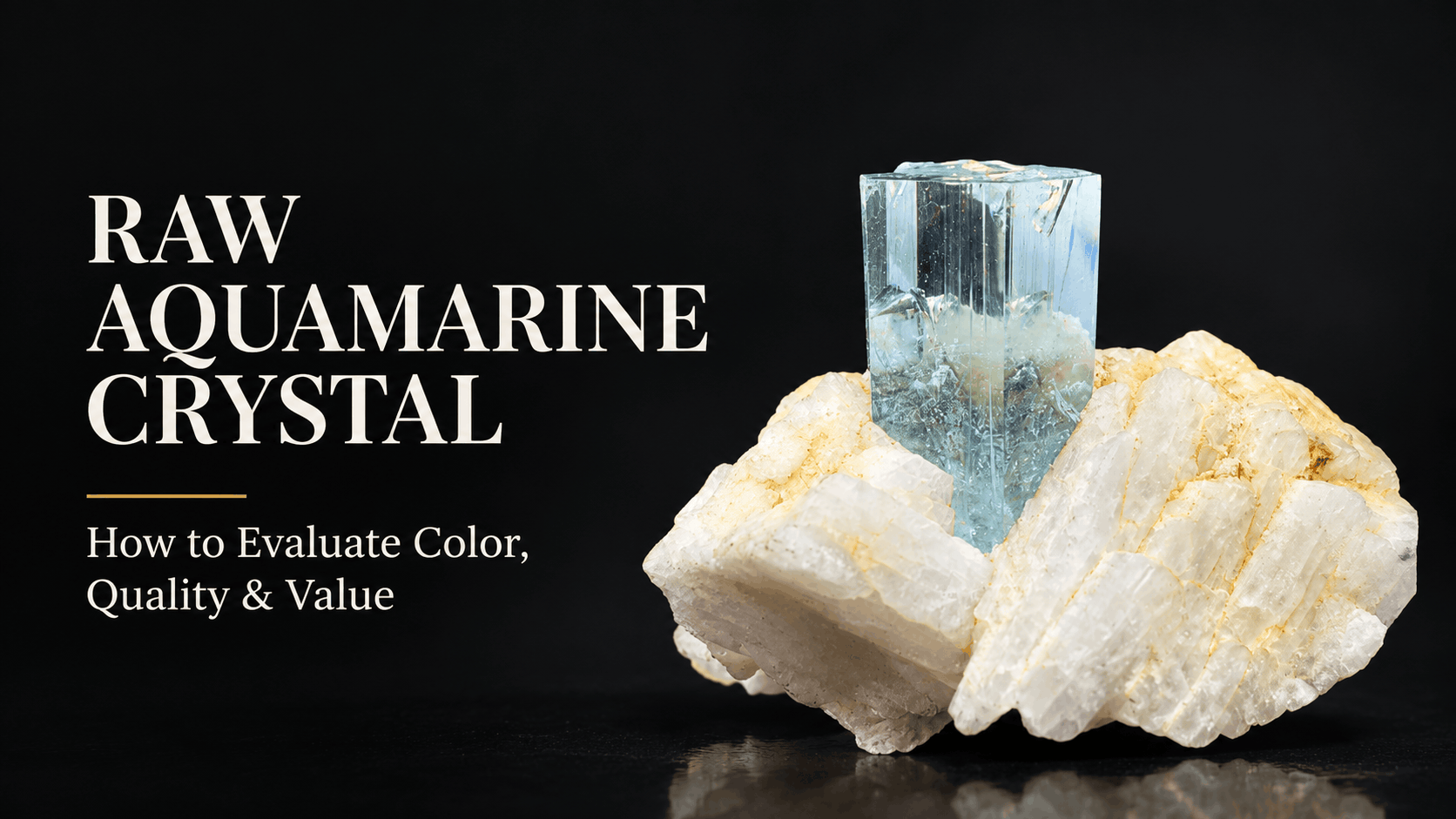
Raw Aquamarine Crystal: How to Evaluate Color, Quality and Value
Discover what to look for in a natural aquamarine crystal, from color and crystal termination to matrix, condition and collector appeal.
A raw aquamarine crystal offers something different from a faceted gemstone. You can appreciate its natural crystal form, surface texture, internal features and geological character. For mineral collectors, these details can be just as important as color and transparency.
Some aquamarine crystals attract attention for their blue color and well-defined terminations. Others stand out because of natural etching, distinctive proportions or an attractive association with quartz, feldspar and other minerals.
If you are considering buying an aquamarine crystal online, this guide explains how to compare specimens, what details to inspect and which questions to ask before making a purchase.
What Is a Raw Aquamarine Crystal?
Aquamarine is the blue to greenish-blue variety of beryl. Its color is associated with trace amounts of iron in the mineral’s structure. Natural aquamarine commonly develops elongated, six-sided prismatic crystals.
A raw aquamarine crystal has not been fashioned into a conventional faceted gemstone. Depending on the specimen, it may display transparent areas, natural growth lines, etched surfaces, inclusions or a combination of minerals attached to a matrix.
Some rough crystals are selected as potential cutting material. Others are collected for their natural shape and display appeal. A mineral specimen should therefore be assessed as a whole—not by color alone.
1. Evaluate the Aquamarine Crystal’s Color
Color is often the first feature that attracts a buyer. Aquamarine ranges from pale blue to greenish blue, with variations in tone and saturation.
| Feature | What to examine | Question to ask |
|---|---|---|
| Hue | Blue, greenish blue or a tone between the two. | Does the photograph represent the specimen’s natural appearance? |
| Saturation | Whether the color appears pale or more concentrated. | Was the crystal photographed under strong lighting or backlighting? |
| Color distribution | Variation between different areas of the crystal. | Can I see the crystal from more than one angle? |
A stronger blue may appeal to some collectors, but it is not the only reason to choose a specimen. A pale crystal can still be attractive because of its transparency, proportions, natural surface features or matrix association.
Photographs can influence perceived color. Bright backlighting may make a crystal look more luminous, while a dark background can increase visual contrast. Compare several views and ask for clarification if the color appears inconsistent.
For additional gemological context, consult the Gemological Institute of America’s aquamarine buyer’s guide. Remember that faceted-gem criteria do not cover every aspect of a natural mineral specimen’s collector appeal.
2. Inspect Crystal Form and Termination
A well-formed crystal can be appealing even when its color is relatively light. Look at the proportions, development of the prism faces and shape of the termination—the naturally formed end of the crystal.
- Are the crystal faces and edges clearly visible?
- Can the termination be examined from more than one angle?
- Are natural growth features visible?
- Are any chipped edges, broken ends or possible repairs disclosed?
Do not automatically classify every irregular surface as damage. Natural etching and growth features can contribute to a specimen’s character. If the termination is a major reason for your interest, ask the seller for a close-up photograph.
3. Consider Transparency, Luster and Surface Texture
Transparency describes how readily light passes through the crystal. Luster describes how its surface reflects light. These characteristics influence appearance, but they are not interchangeable.
When assessing a rough aquamarine crystal, check whether it appears transparent, translucent or opaque; whether its visible faces have a bright or subdued luster; and whether inclusions, fractures or surface features can be seen in the photographs.
A specimen does not have to be flawless to be interesting. Natural etching, inclusions and growth structures can contribute to its individual character. Their significance depends on the specimen and your preferences as a collector.
4. Aquamarine on Matrix vs. Standalone Crystals
Some collectors prefer an individual aquamarine crystal that can be viewed from several angles. Others look for specimens in which aquamarine is naturally associated with quartz, feldspar, mica or other minerals.
| Consideration | Standalone crystal | Crystal on matrix |
|---|---|---|
| Main visual focus | Crystal shape, color and termination. | Crystal and surrounding mineral composition. |
| Display appeal | Often a simple, focused presentation. | Can offer contrast, geological context and a natural base. |
| What to inspect | Edges, termination, surface condition and proportions. | Crystal visibility, attachment areas, matrix condition and balance. |
| Best choice | Depends on the collector’s preferences. | Depends on the collector’s preferences. |
The matrix is not merely background material. In many fine mineral specimens, the relationship between the crystal and its host minerals is an important part of the overall appeal.
5. What Determines Raw Aquamarine Crystal Value?
There is no single feature that determines the value of every raw aquamarine crystal. Price depends on the individual specimen, its condition, its intended use and the evidence available about its origin.
| Value factor | What buyers should consider |
|---|---|
| Color and transparency | Color preference, saturation, visible transparency and how the crystal looks under neutral lighting. |
| Crystal form | Proportions, development of faces, termination and natural surface features. |
| Condition | Visible chips, damage, repairs or restoration, where applicable. |
| Matrix and aesthetics | Contrast, composition, display angle and the relationship between associated minerals. |
| Size and rarity | Actual dimensions and substantiated information about the specimen—not size or rarity claims alone. |
| Locality and provenance | Stated origin and any supporting labels, records or documented ownership history. |
A larger crystal is not automatically more desirable than a smaller one. Likewise, a locality name does not by itself establish quality or value. Compare the specimen’s actual features with its asking price rather than relying on weight alone.
6. How to Buy a Raw Aquamarine Crystal Online
When buying online, you may have to assess a specimen before examining it in person. Clear product information and photographs from multiple angles are therefore essential.
- Confirm dimensions. Check height, width and depth. Weight alone does not tell you how the specimen will look on display.
- Review multiple photographs. Look for front, side, rear, base and close-up views where available.
- Read the condition description. Ask about damage, repairs or restoration if details are unclear.
- Review locality information. If provenance matters to you, ask whether supporting documentation is available.
- Check shipping and returns. Read the seller’s policies, including any relevant duties or taxes for international orders.
- Ask questions before paying. Clarify anything important that cannot be established from the listing.
7. Explore Aquamarine Specimens at Fine Quality Minerals
Looking at actual specimens is one of the best ways to compare natural crystal forms, matrix associations and display appeal. Here are two aquamarine listings from Fine Quality Minerals to explore.

Etched Aquamarine Crystal with Quartz on Matrix
This specimen is listed as originating from Shigar Valley, Skardu, Pakistan. Its aquamarine crystal and quartz association make it relevant to collectors interested in mineral composition and natural surface character.

Etched Termination Aquamarine with Spessartine Garnet
This specimen combines aquamarine with orange spessartine garnet on star feldspar. The contrasting minerals create a distinctive composition for a display collection.
Product availability, prices and listing details can change. Check each product page for current information before purchasing. The first image above is a small product thumbnail; replace its image URL with the full-resolution product image from your WordPress Media Library before publishing.
Frequently Asked Questions
What should I look for in a raw aquamarine crystal?
Consider color, transparency, crystal form, termination, surface condition and overall aesthetics. For a display specimen, also examine the matrix, dimensions and locality information.
Is a darker aquamarine crystal always more valuable?
No. Color can influence desirability, but it does not determine value on its own. Crystal form, condition, transparency, matrix and the specimen’s overall appeal can also matter.
Is aquamarine on matrix better than a standalone crystal?
Neither is automatically better. A standalone crystal focuses attention on the aquamarine, while a matrix specimen may appeal to collectors who value mineral associations and natural composition.
How can I check whether an aquamarine crystal is natural?
Photographs and seller descriptions provide useful information, but they cannot conclusively establish natural origin in every case. Review identification details and documentation, and consider independent gemological assessment when appropriate.
What affects the price of a rough aquamarine crystal?
Price depends on the individual specimen’s color, form, condition, dimensions, transparency, matrix, locality information and overall desirability. Compare similar specimens rather than relying on weight alone.
Discover Natural Aquamarine Crystals
Explore aquamarine specimens, compare crystal forms and matrix associations, and review the details of each piece before choosing one for your collection.
Choosing a raw aquamarine crystal is about more than finding the darkest color or the largest piece. Take time to inspect its form, condition, dimensions and natural composition. A careful comparison can help you select a specimen that suits your collection and that you will enjoy displaying.