
Blog
Raw Crystals vs. Cut Gem Stones: The Collector’s Investment Guide | FQM

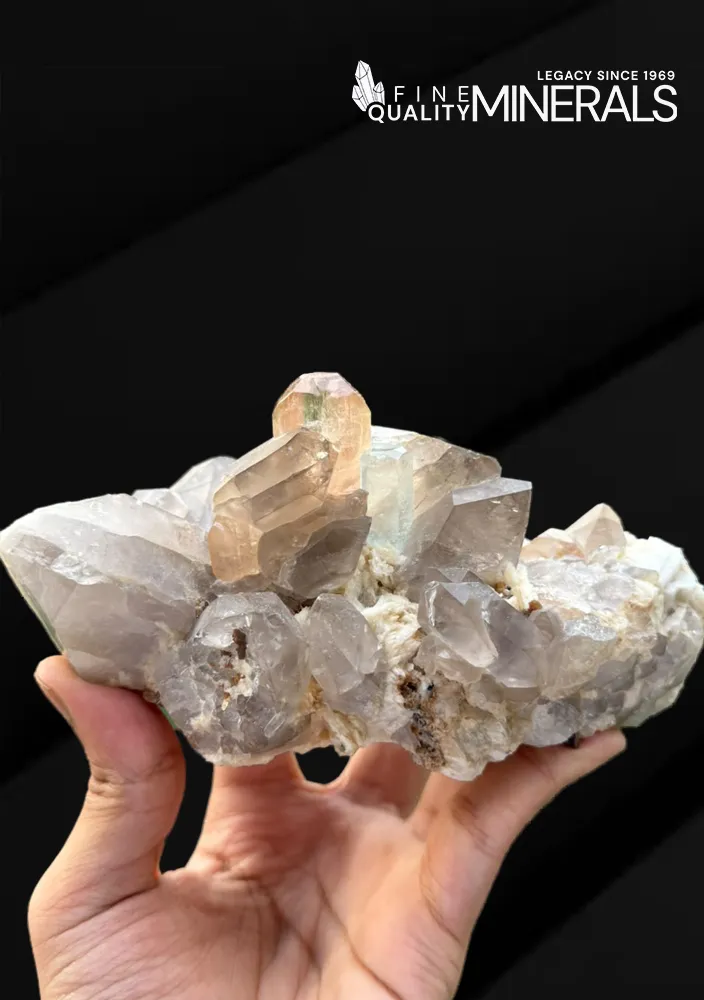
Raw Crystals vs. Cut Gemstones: Which Holds More Investment Value?
For centuries, the pinnacle of wealth and luxury has been symbolized by faceted gem stones—brilliantly cut diamonds, sapphires, and rubies set into heavy gold. However, over the past two decades, a quiet but massive shift has occurred in the portfolios of high-net-worth individuals, institutional investors, and elite curators. The modern connoisseur is looking beyond the jeweler’s wheel.
Today, the most exclusive and rapidly appreciating assets in the geological world are museum-grade raw crystals.
While a perfectly faceted gemstone represents human craftsmanship and precision, an untouched, damage-free raw crystal represents something infinitely rarer: Earth’s untouched architectural mastery. In the world of high-end fine minerals, the intervention of a lapidary (gem cutter) is not an enhancement; it is a destruction of geological provenance.
Here is why elite collectors are turning their attention to pristine, unheated raw crystals, and why these natural formations often hold significantly more long-term investment value than their commercially cut counterparts.
1. The Destruction of Context: Why Matrix is King
When miners extract a crystal from a high-altitude pegmatite pocket, it is rarely alone. It grows attached to a host rock, surrounded by associated minerals like snowy cleavelandite, smoky quartz, or sparkling lepidolite. This surrounding rock is called the matrix.
To create commercial gem stones, a rough crystal must be broken off its matrix, heavily fractured to remove inclusions, and ground down on a diamond wheel, losing up to 70% of its original mass. It becomes a standardized, commodified product.
For collectors of fine minerals, the matrix is paramount. A flawless aquamarine or tourmaline crystal standing perfectly upright on its original, contrasting host rock is a one-of-a-kind geological sculpture. It proves exactly how and where the specimen formed.
- The Rarity of Survival: It takes immense skill to extract large crystals attached to their matrix from deep inside a mountain without a single point of damage.
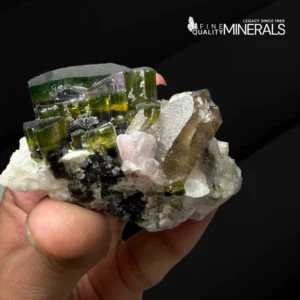
- Aesthetic Superiority: A vibrant pink rubellite tourmaline perched on pure white albite offers a visual contrast and sculptural presence that a loose, cut stone simply cannot replicate.
An intact matrix specimen is a singular work of natural art. Once a crystal is cut into a gem, its history, context, and unique structural identity are permanently erased.
2. The Authenticity Premium: 100% Unheated and Untreated
The commercial gemstone market harbors a widely accepted secret: the vast majority of colored gem stones sold globally undergo severe artificial enhancements.
Sapphires are baked in industrial furnaces at 1,800°C to dissolve rutile silk and enhance blue hues. Topaz is bombarded with radiation to turn it artificially blue. Rubies are often filled with lead glass to hide massive fractures. While these treatments are accepted in commercial jewelry, they decimate the intrinsic, natural value of the stone.
The investment market for raw crystals demands absolute purity. Elite collectors require specimens to be exactly as the earth yielded them.
- No Heat Treatment: A museum-grade crystal must derive its color entirely from natural trace elements (chromophores) introduced during its hydrothermal growth millions of years ago, not from a laboratory oven.
- No Polishing: The crystal faces must showcase their natural luster, growth striations, and complex geometric terminations (the tips).
- No Repairs: The highest-valued mineral specimens feature zero glue, zero repairs, and zero artificial reconstruction.
When you acquire world-class raw crystals, you are investing in absolute, unadulterated geological truth. This verified authenticity drives a massive premium in the fine mineral secondary market.
3. The Fallacy of the 4 Cs vs. The Complexity of Minerals
Diamonds and standard gem stones are graded on a rigid, commodified scale known as the 4 Cs: Cut, Color, Clarity, and Carat. Because they are standardized, they are easily price-matched and subject to broader market fluctuations and the rise of lab-grown synthetics.
Fine minerals operate on an entirely different plane of valuation, much closer to the fine art market (like a Picasso or a Monet).
You cannot simply price a matrix specimen by its weight. Valuation is driven by:
- Aesthetic Architecture: How well is the crystal positioned on the matrix? Is there a focal balance?
- Termination Integrity: Is the tip of the crystal perfectly sharp and naturally formed, without a single microscopic chip?
- Geographical Provenance: Does the specimen come from a legendary, closed, or highly dangerous locality (e.g., the Paprok pegmatites in Afghanistan, or the Shigar Valley in Pakistan)?
- Association: Does it feature rare mineral combinations growing together in harmony?
Because no two raw mineral specimens will ever be identical, they possess an inherent scarcity that manufactured or cut stones lack. This extreme exclusivity protects the asset’s value from market saturation.
4. Market Liquidity and the Supply Cliff
The supply of commercial-grade gemstone rough is vast and actively mined across dozens of countries to feed the global jewelry complex. Conversely, the supply of damage-free, museum-grade raw crystals is facing a sheer cliff.
High-end fine minerals are not mined by massive, open-pit corporate operations. They are extracted by hand, often in incredibly harsh, high-altitude alpine environments like the Hindu Kush or the Karakoram ranges.
- Many legendary pockets that produced the world’s finest specimens have been completely exhausted.
- As these specific localities dry up, the raw crystals extracted from them transition from being active commodities to historical artifacts.
When an investor acquires top-tier minerals for sale with documented provenance, they are capturing a finite piece of Earth’s history. As global wealth expands and more high-net-worth individuals enter the mineral collecting sphere, this strictly capped supply drives aggressive, consistent year-over-year appreciation.
5. Transitioning Your Portfolio: How to Buy Investment-Grade Minerals
If you are accustomed to purchasing fine jewelry or loose gem stones, transitioning to raw crystals requires a shift in perspective. You are no longer buying a wearable accessory; you are curating a gallery of natural art.
- Start with Provenance: Always buy from established, direct-source dealers who can verify the exact mine, region, and extraction history of the piece.
- Prioritize Perfection Over Size: A flawless, deeply saturated, thumbnail-sized crystal on a beautiful matrix will always outperform a massive, heavily damaged, or dull specimen in long-term value.
- Seek Display Potential: The best large crystals command attention from across a room. Look for pieces with high vitreous luster, intense color zoning, and balanced sculptural architecture that will dominate a custom-lit display cabinet.
Frequently Asked Questions
Are raw crystals actually rarer than cut gem stones?
Yes. While the earth produces massive amounts of flawed, highly included rough material that lapidaries cut down into small, clean gem stones, it rarely produces a large, transparent, perfectly terminated crystal on a beautiful matrix without any natural geological damage. A flawless, intact raw specimen is a statistical anomaly.
How do I know if a raw crystal has been treated or faked?
Unlike cut stones, raw crystals are incredibly difficult to fake convincingly because of their matrix associations and complex growth striations. However, some unscrupulous sellers may glue broken crystals back onto a matrix or oil them to hide fractures. Always acquire fine minerals from reputable dealers with a strict mine-to-market protocol who guarantee their specimens are 100% natural and un-repaired.
Can I facet a high-quality raw crystal into a gem stone later?
While you physically could, doing so to a museum-grade matrix specimen would immediately destroy its financial and historical value. The raw, sculptural form and the matrix association are what make the specimen an exclusive, high-ticket asset. Faceting it reduces it to a standard commodity.
Where are the best raw crystals in the world mined?
While exceptional minerals are found globally, the pegmatites of the Himalayas, Karakoram, and Hindu Kush mountains—specifically in Pakistan and Afghanistan—are internationally revered for producing the world’s finest tourmaline, aquamarine, and topaz mineral specimens.
Curate Your Legacy with Fine Quality Minerals
The transition from commercial gems to investment-grade fine minerals marks the evolution of a true collector. At Fine Quality Minerals, we bypass the commercial cutting industry entirely, sourcing directly from the highest-altitude pegmatites in Pakistan and Afghanistan.
With over 55 years of rigorous mine-to-market heritage, we provide elite curators with 100% authentic, damage-free, and unheated geological masterpieces. Whether you are seeking a vibrant Paprok tourmaline or an architectural Shigar aquamarine, every specimen in our vault is an uncompromised work of natural art.
Explore Our Exclusive Collection of Raw Minerals for Sale →