Blog
Amethyst Origins: Where This Purple Gem Comes From

Amethyst Origins: Where This Purple Gem Comes From
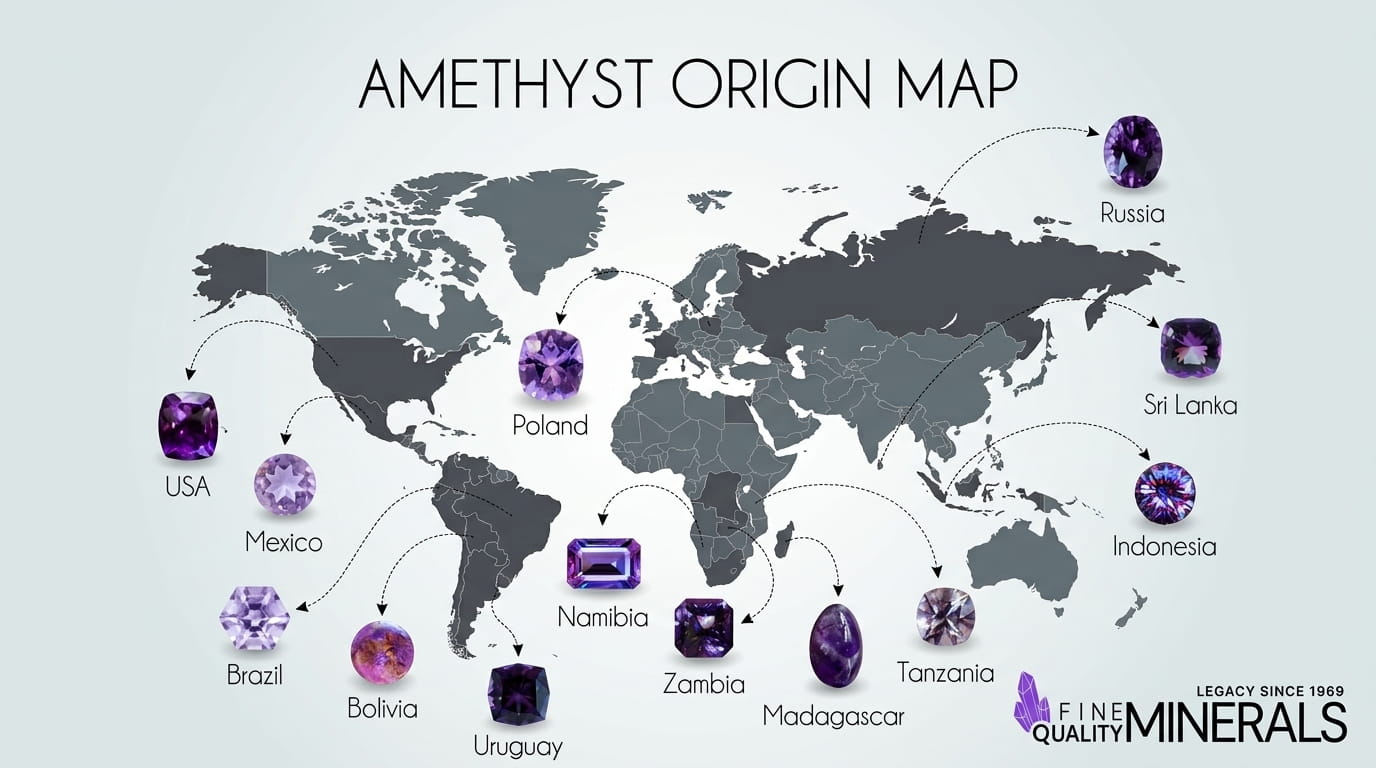
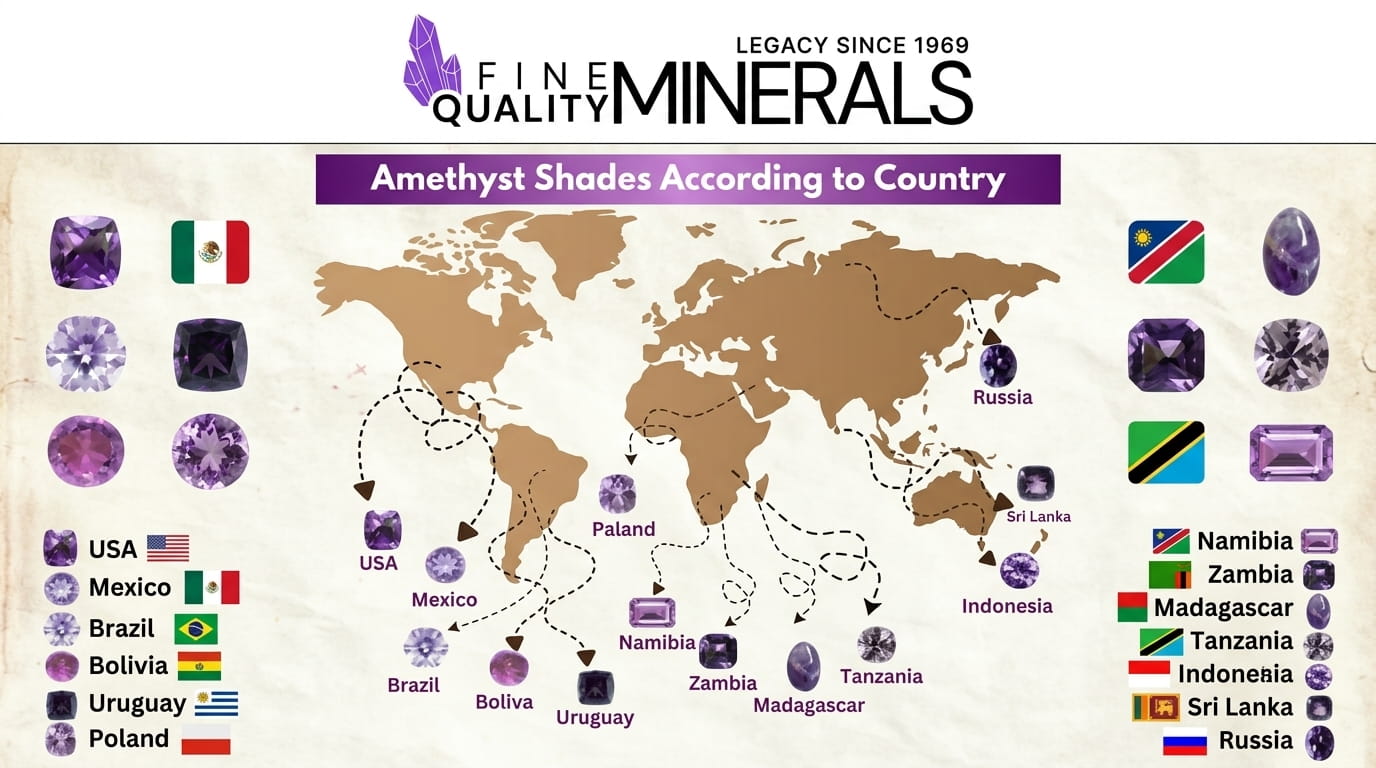
Natural amethyst forms across at least 13 primary countries, yet specimens look remarkably different depending on where they grew. Understanding amethyst origins reveals that these variations are purely geological. The host rock, the iron concentration of ancient mineral fluids, and the level of natural irradiation underground dictate whether a crystal emerges as pale lavender, deep royal violet, or flashes with blue undertones.
As a purple quartz gemstone, the color develops when trace iron locks into the quartz lattice during crystallization and undergoes natural irradiation from surrounding rocks over millions of years. Excessive subterranean or thermal heat reverses this reaction, turning the stone yellow into citrine. That exact interaction, iron plus irradiation, explains why examining where amethyst come from uncovers such diverse crystal habits and hues across global deposits.
South American Deposits: The Supply Giants
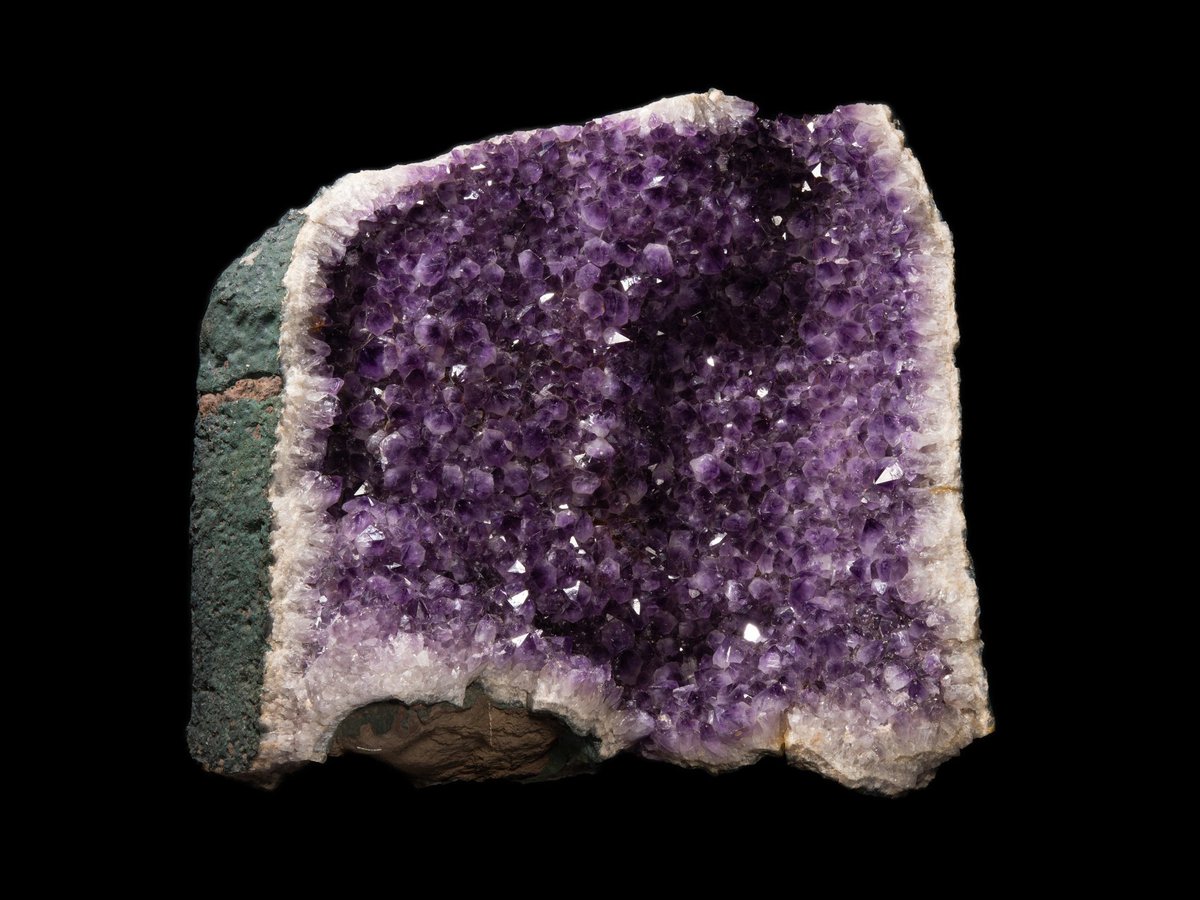
When studying major amethyst mining countries, Brazil and Uruguay anchor the global trade. Both nations extract crystals from the Serra Geral formation, an extensive flood-basalt sequence created roughly 130 million years ago during the opening of the South Atlantic. Gas pockets trapped inside the cooling basalt lava left hollow chambers that silica-rich groundwater gradually filled with chalcedony, agate, and crystalline purple quartz.
1. Brazil: The Center of Global Output
The municipality of Ametista do Sul in Rio Grande do Sul acts as the hub for Brazilian amethyst. Approximately 400 small-scale underground operations and family cooperatives extract material using light tools and controlled gunpowder charges to free the basalt cavities without damaging crystal faces. Miners track dark green celadonite mica layers as primary indicators of nearby cavities. Inside, bands transition through agate, clear quartz, and rich purple tips. The district generates roughly 400 tonnes of material monthly, ranging from hand-sized specimens to multi-meter hollow geodes. Brazilian amethyst is widely recognized for its consistent, uniform violet coloration.
2. Uruguay: Deep Saturated Violet
Just across the border, the Artigas department (the Los Catalanes basin) taps the same basalt system. Uruguayan crystals are celebrated for intense grape-purple saturation, supporting an established market premium over lighter stones. Recognized officially as Uruguay’s National Capital of Precious and Semiprecious Stones in 2015, Artigas also produced the “Empress of Uruguay,” a famous 3.27-meter, 2.5-ton geode unearthed in 2007. Together, Brazil and Uruguay produce roughly 600 tonnes of combined amethyst and agate geode material every month.
Bolivia: The World’s Lone Source of Natural Ametrine
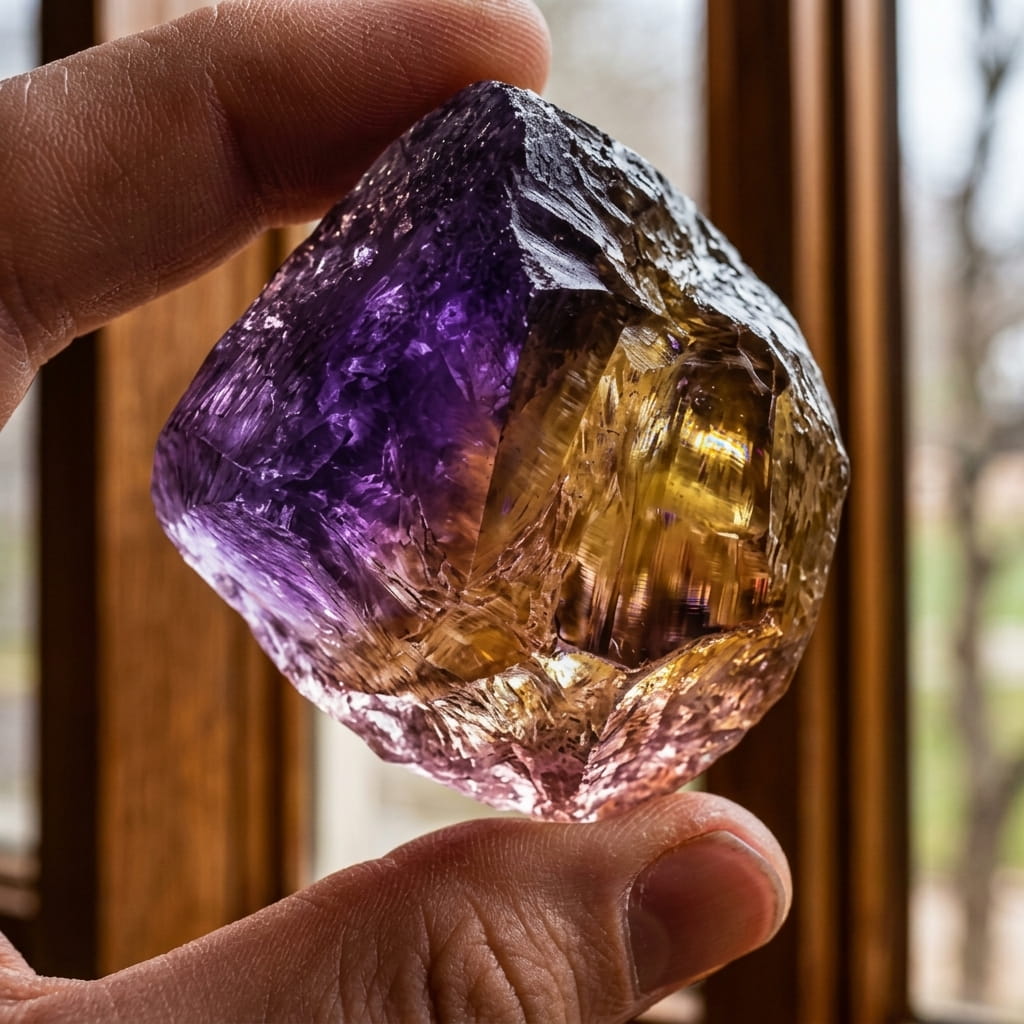
Eastern Bolivia’s Santa Cruz department hosts the Anahí mine, the planet’s only commercial producer of Bolivian ametrine. This distinct variety features sharp geometric partitions of purple amethyst and golden-yellow citrine within a single crystal lattice. Rather than an artificial laboratory treatment, this bicolored zoning formed naturally due to localized temperature gradients during hydrothermal growth.
Operating continuously since 1990, the underground Anahí mine yields roughly 120 tonnes of quartz rough annually. The production sorts out to roughly 44% amethyst, 33% ametrine, and 23% citrine by weight, with natural ametrine commanding the highest value. Regional miners coined the term “bolivianite” after processed gems exported abroad were repeatedly mislabeled by international dealers.
United States: High-Altitude Quartzite at Four Peaks
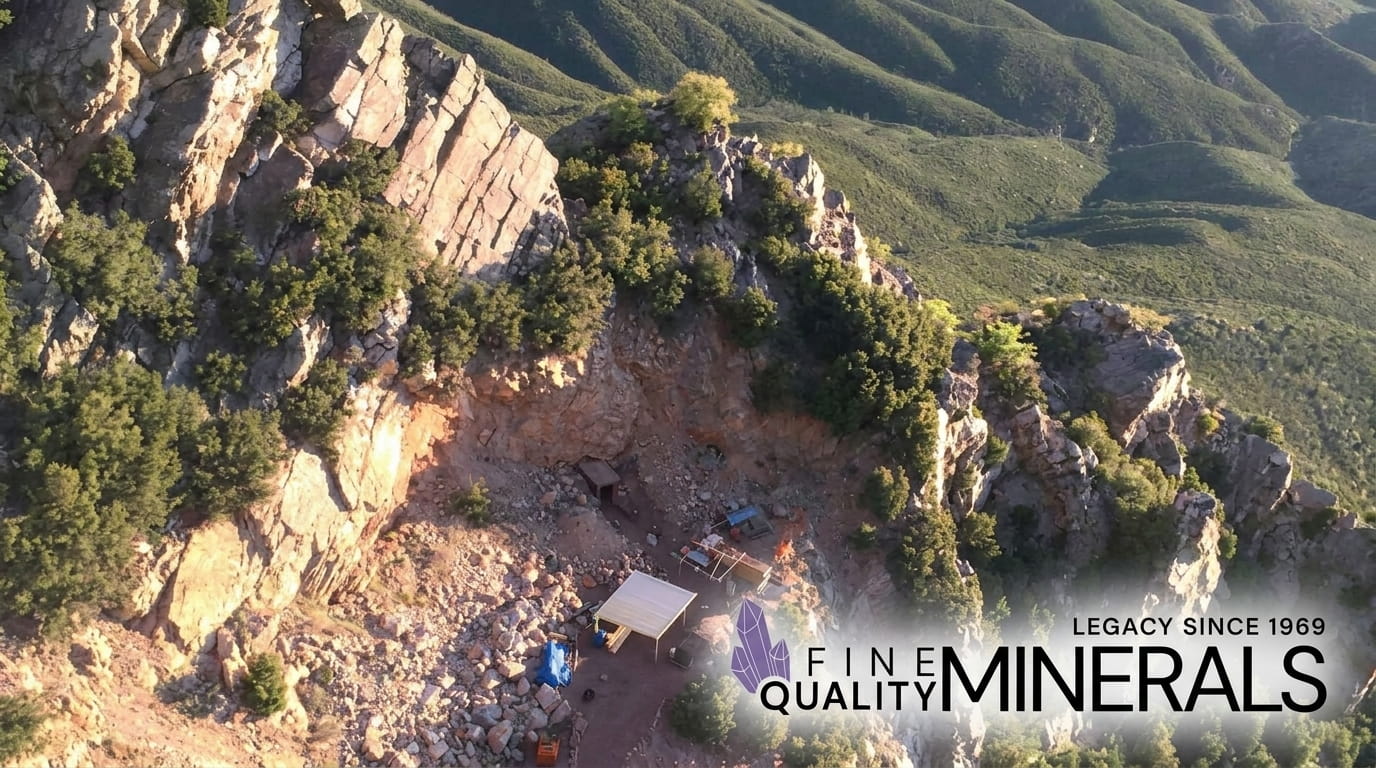
The Four Peaks deposit in Arizona’s Mazatzal Mountains represents the only commercial amethyst mine operating in the United States. Unlike the vast basalt flows of South America, Four Peaks Arizona amethyst formed inside 1.3-billion-year-old quartzite. Thermal, iron-bearing fluids moved through fractured metamorphic rock, dissolving sections of quartzite and crystallizing quartz points as temperatures declined.
Reachable solely by helicopter or rugged foot trails, the deposit is worked strictly by hand using non-mechanized tools to safeguard crystal integrity. From about one ton of extracted rough annually, the operation yields approximately 50 pounds of clean faceting rough. Because of its saturated body color with magenta-red flashes, fine Four Peaks gems are often compared to legendary historical Russian material. Minor deposits also occur in Maine and North Carolina, though primarily as mineralogical occurrences.
African Sources: High Saturation and Unique Inclusions
African localities are celebrated among gemologists for intense color saturation, strong pleochroism, and distinct internal zoning.
1. Zambia: The Kariba Deposit
Located near Mapatizya in the Southern Province, the Kariba mine supplies more than 90% of Zambia’s commercial output, generating up to 800 tonnes annually. Zambian amethyst (Kariba amethyst) forms as vein and fracture fillings within ancient granitic gneiss and marble units, primarily centered on the Top Curlew pit. It is prized across the trade for a distinct blueberry-purple body color accented by sharp blue secondary flashes, often warming toward pinkish tones under incandescent lighting.
2. Namibia: Goboboseb and Brandberg Crystals
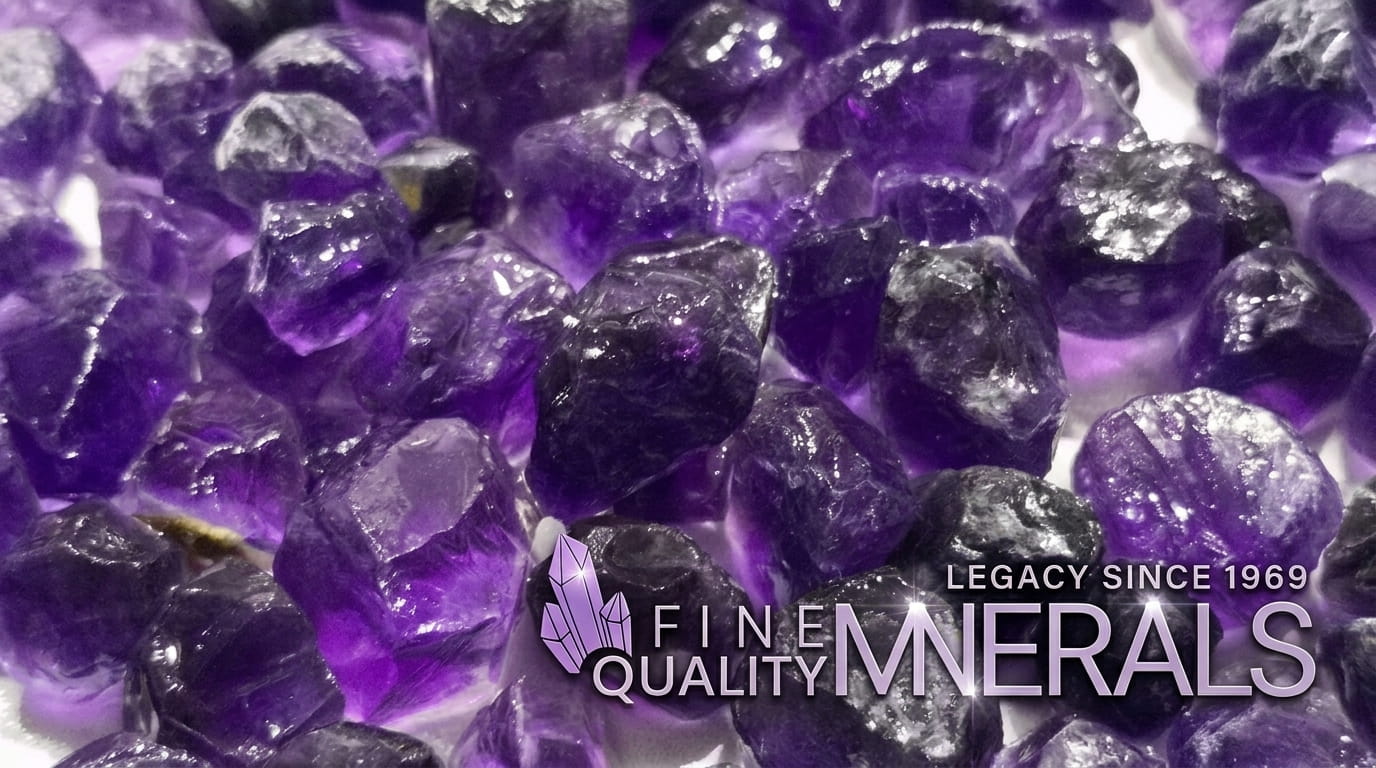
Most material sold under the trade name Brandberg actually originates in the nearby Goboboseb Mountains, just west of the protected Brandberg massif. Crystallizing in basalt cavities within the Etendeka volcanic series, these specimens are renowned among collectors for intricate internal zoning. A single crystal point can exhibit transparent quartz, dark smoky zones, and purple amethyst, frequently displaying skeletal growth phantoms and movable fluid inclusions (enhydros).
Historical Russian Material and the “Siberian” Standard
While Russia produces minimal commercial rough today, historical deposits in the Ural Mountains established the trade benchmark for Siberian amethyst. Initiated under Peter the Great during the early 18th century, mines near Mursinka yielded hydrothermal crystals from pegmatitic veins rather than basalt cavities.
This material displayed a velvety deep purple color accompanied by vivid red and blue secondary flashes. It supplied Imperial jewelry houses, Fabergé, and royal regalia until deposits were depleted toward the close of the 19th century. Because of this historical prestige, gemological laboratories and auction houses still use the designation Siberian amethyst to describe top-tier, highly saturated purple gems regardless of where they were unearthed.

Secondary Localities Across the Globe
Amethyst also appears across several other regions, frequently discovered as a secondary mineral during the extraction of other gemstones:
- Mexico: Guerrero state produces attractive purple crystal clusters and prismatic points, though crystal size generally limits commercial faceting.
- Sri Lanka: Crystals are recovered from alluvial gem gravels (known locally as illam) around Ratnapura, alongside sapphire and spinel.
- Madagascar: Deposits around Ambatondrazaka and Ambilobe yield clean, saturated crystals.
- Indonesia: Alluvial gravels in Kalimantan (Borneo) produce small volumes of gem-grade rough.
- Tanzania & Poland: Minor deposits occur in Tanzanian pegmatite belts and historic European mineral veins.
Global Amethyst Locality Comparison
| Country / Region | Host Geology | Signature Color Profile | Primary Market Use |
|---|---|---|---|
| Brazil (Ametista do Sul) | Basalt lava gas cavities (geodes) | Even, uniform lilac to medium violet | Geode decor, commercial jewelry |
| Uruguay (Artigas) | Basalt flood sequences | Deep, highly saturated grape-purple | High-end geode specimens, fine cut gems |
| Bolivia (Anahí Mine) | Hydrothermal carbonate/fault zones | Bicolor purple and golden-yellow (ametrine) | Faceted bicolored gemstones |
| United States (Four Peaks) | Fractured Precambrian quartzite | Deep purple with vivid magenta flashes | Collector gems, American provenance jewelry |
| Zambia (Kariba Mine) | Granitic gneiss and marble fractures | Blueberry purple with distinct blue flashes | Faceted calibrated and high-end gems |
| Namibia (Goboboseb) | Volcanic basalt cavities | Smoky-amethyst zoning with phantoms | Display specimens, mineral collections |
| Russia (Urals, Historic) | Hydrothermal pegmatite veins | Royal purple with intense red/blue flashes | Antique regalia, trade color benchmark |
Why Provenance Matters to Buyers and Collectors
A crystal’s origin does not automatically make it superior; color saturation, transparency, cut precision, and crystal condition always dictate absolute gem quality. Nevertheless, provenance explains why Uruguayan geodes command premium pricing over standard Brazilian pieces, why Zambian material is sought after for its rare blue flashes, and why historical terminology like Siberian grade remains active today. Knowing the source helps buyers confirm natural characteristics and evaluate the true value of their collection.
Frequently Asked Questions About Amethyst Origins
What causes the purple color in natural amethyst?
Amethyst’s purple color comes from trace amounts of iron (Fe³⁺) trapped inside the silicon dioxide crystal lattice during growth. Over millions of years, natural gamma irradiation from the surrounding host rocks alters the iron’s oxidation state, producing the characteristic violet hue.
Why do Uruguayan amethysts cost more than Brazilian amethysts?
While both originate from the same geological basalt formation (the Serra Geral flow), Uruguayan geodes from the Artigas district consistently exhibit a deeper, more saturated grape-purple color. Brazilian material tends to show lighter, more uniform violet tones, making the intensely saturated Uruguayan crystals more desirable and valuable to collectors.
Can natural amethyst turn into citrine?
Yes. When natural amethyst is subjected to temperatures exceeding 400°C to 500°C, the iron centers that create the purple color destabilize, shifting the stone’s color to golden yellow, orange, or reddish-brown. This occurs naturally in certain geological environments and is also used commercially in laboratories to produce heated citrine.
What is the difference between Siberian amethyst and other sources?
“Siberian amethyst” originally referred to historical gems mined in Russia’s Ural Mountains that displayed deep royal purple coloration with distinctive red and blue flashes under incandescent light. Because those mines were depleted in the 19th century, the term is now used as an industry color grade for top-tier amethyst displaying that same secondary red flash, regardless of where it was mined.
Where is natural ametrine found?
The Anahí mine in eastern Bolivia is the world’s only commercial source of natural ametrine. The distinct two-color split of purple amethyst and yellow citrine within a single crystal lattice is completely natural, caused by subtle temperature differences across the crystal faces while growing underground.
Curate Your Fine Mineral Collection
Whether you are looking for an untreated, high-altitude crystal specimen or seeking documented geological pieces for your personal collection, verified provenance ensures lasting value. Explore natural, unheated crystals in our Online Mineral Gallery, or contact our curators through the Acquisitions Desk for specialized sourcing inquiries.